Top 10 Blood Tests for Chronic Fatigue and Low Energy
How These Markers Influence Cellular Energy and Mitochondrial Efficiency
Fatigue doesn’t always look dramatic.
You may not be bedridden.
You may not be acutely ill.
You may still function.
But everything feels heavier than it should.
Energy drops by early afternoon.
Focus dulls.
Recovery slows.
Stress feels harder to handle.
Your labs return.
“Everything looks normal.”
So why don’t you feel normal?
Chronic fatigue is rarely caused by one abnormal number.
More often, it reflects subtle patterns across systems that influence cellular energy production — especially inside the mitochondria.
If you’re new to that concept, see What Is ATP and Why It Matters for Energy, Fatigue, and Mitochondrial Health.
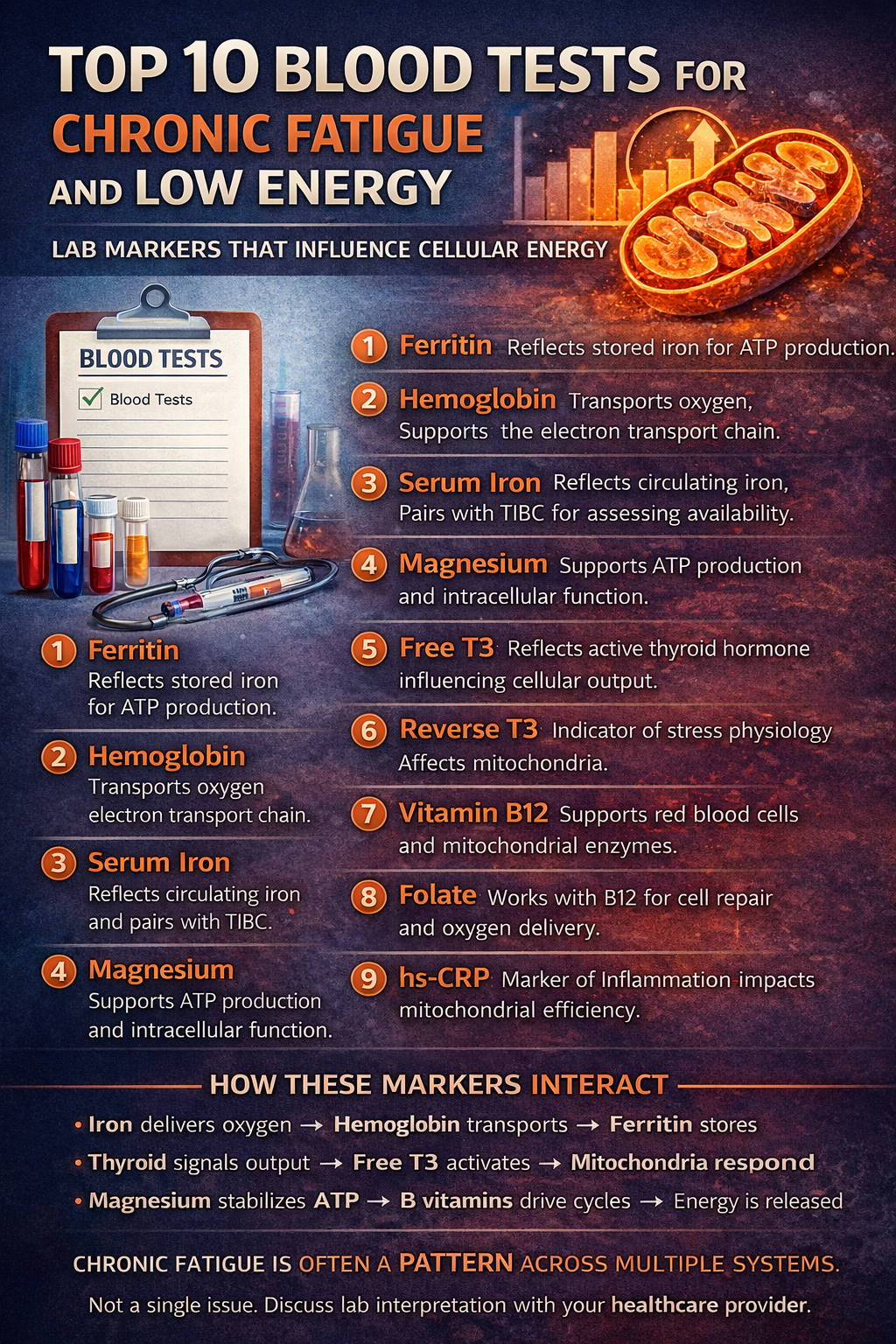
Below are ten blood tests that commonly influence energy efficiency.
1. Ferritin (Iron Reserves)
Ferritin reflects stored iron.
Iron is embedded in the electron transport chain — the system responsible for producing ATP.¹²
Iron deficiency without anemia has been associated with fatigue and reduced physical performance before hemoglobin declines.³
This is why ferritin often provides deeper insight than hemoglobin alone.
See: Low Ferritin but Normal Hemoglobin: What It Means
2. Hemoglobin
Hemoglobin transports oxygen.
Oxygen is the final electron acceptor in ATP production.
Low hemoglobin clearly impairs energy production, but normal hemoglobin does not guarantee robust iron reserves.
3. Serum Iron (and TIBC / Transferrin Saturation)
Serum iron reflects circulating iron.
When combined with TIBC and transferrin saturation, it helps reveal iron availability and utilization patterns.
Patterns matter more than single values.
4. Magnesium (Serum or RBC)
ATP must bind to magnesium to become biologically active.⁴
Magnesium supports:
• ATP stabilization
• Enzyme activation
• Neuromuscular function
• Cellular signaling
Serum magnesium may not fully reflect intracellular levels.
See: Magnesium and ATP: Why It Matters for Energy
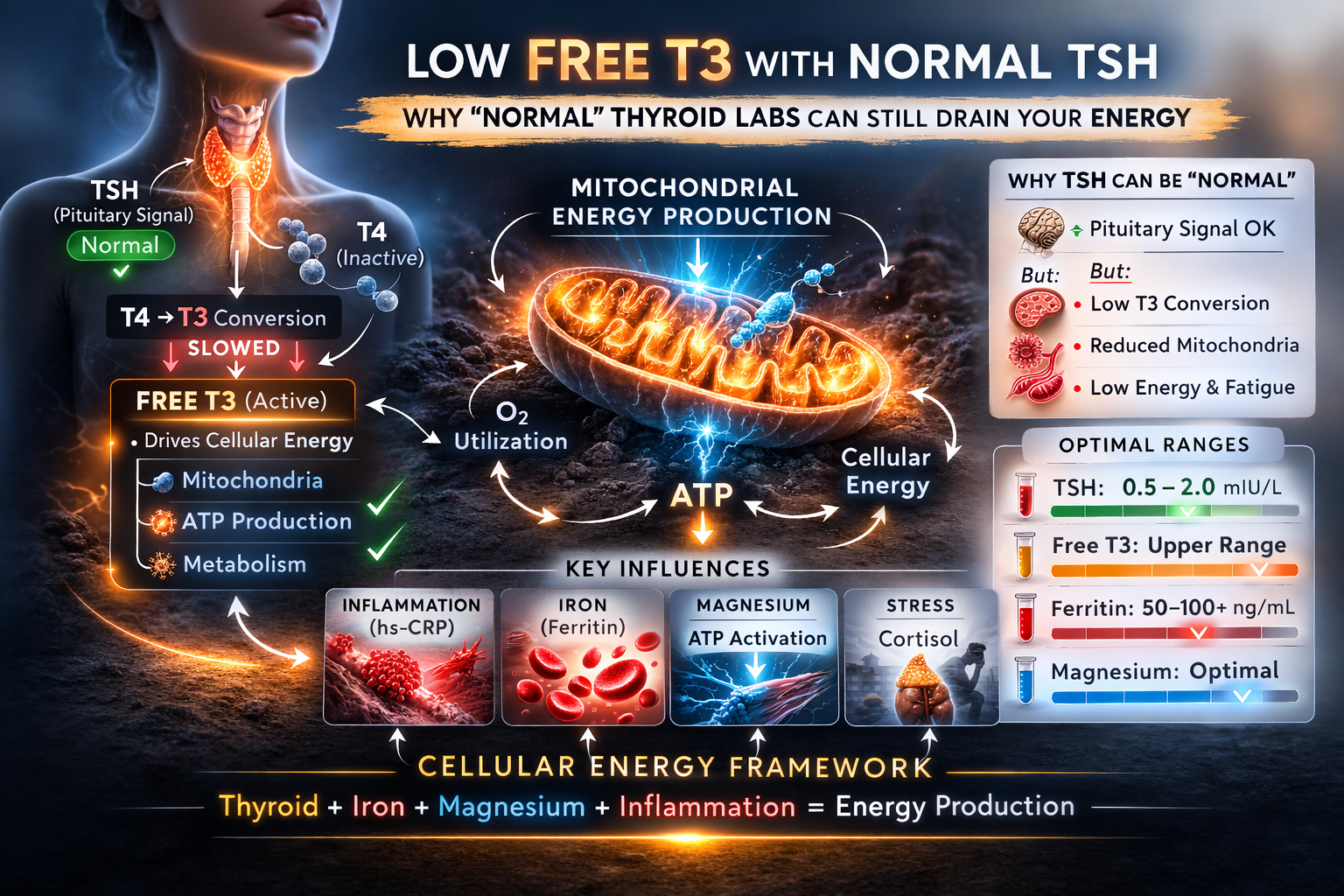
5. Free T3 (Active Thyroid Hormone)
Thyroid hormones regulate mitochondrial respiration and metabolic rate.⁵
Free T3 reflects the active hormone that influences cellular output.
TSH alone does not fully represent mitochondrial responsiveness.
See: Thyroid and Mitochondrial Energy
6. Reverse T3
Reverse T3 is an inactive thyroid metabolite.
Elevated levels may reflect stress physiology and reduced mitochondrial stimulation.
Energy may decline even if TSH appears within range.
7. Vitamin B12
B12 supports:
• Red blood cell production
• Mitochondrial enzymatic reactions
• Neurological function
Low or borderline levels may contribute to persistent fatigue.
8. Folate
Folate works alongside B12 in cellular repair and methylation pathways.
Deficiency may impair red blood cell production and energy metabolism.
9. hs-CRP (High Sensitivity C-Reactive Protein)
Chronic low-grade inflammation can suppress mitochondrial efficiency.⁶
Even mildly elevated hs-CRP may reflect an inflammatory burden that redirects energy away from performance and toward immune signaling.
10. Fasting Glucose (and Triglycerides)
Glucose reflects fuel availability.
Triglycerides reflect metabolic fuel processing.
Instability — high or low — can impair steady ATP production.
Energy requires both delivery and utilization.
See also: Why Your Mitochondria Aren’t Working — And What Your Blood Work Reveals
How These Markers Interact
Energy efficiency is not about isolated values.
It is about coordination.
-
Iron delivers oxygen → Hemoglobin transports → Ferritin stores
-
Thyroid signals output → Free T3 activates → Mitochondria respond
-
Magnesium stabilizes ATP → B vitamins drive metabolic cycles → Energy is released
-
Inflammation suppresses efficiency → hs-CRP reflects systemic burden
No single marker operates alone.
Fatigue often appears when multiple systems sit in the lower end of their reference ranges at the same time.
That pattern matters more than one abnormal number.
This broader framework is outlined in the Educational Blood Lab Interpretation Guide.
Why Patterns Matter More Than Thresholds
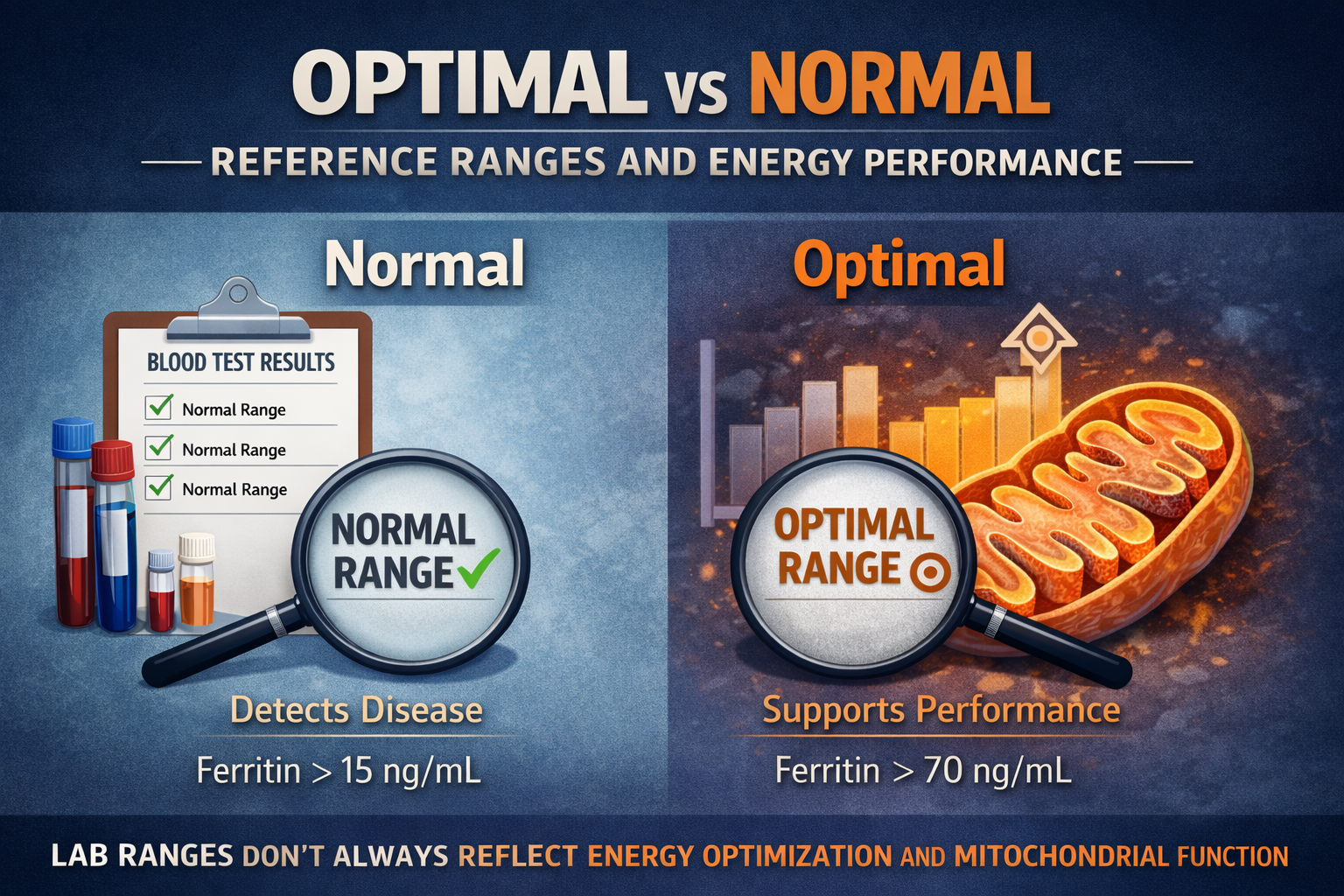
Standard laboratory ranges are designed to detect disease.
Energy efficiency exists along a spectrum.
Ferritin in the lower range.
Magnesium borderline.
Free T3 lower third.
hs-CRP slightly elevated.
None abnormal.
Collectively impactful.
Chronic fatigue often lives in that gray zone.
Research and References
-
Rouault TA. Iron metabolism and cytochromes. Nat Rev Neurosci. 2013.
-
Lill R. Iron-sulfur cluster biogenesis. Nature. 2009.
-
Haas JD, Brownlie T. Iron deficiency and reduced work capacity. Am J Clin Nutr. 2001.
-
Romani AM. Magnesium in health and disease. Arch Biochem Biophys. 2013.
-
Mullur R, et al. Thyroid hormone regulation of metabolism and mitochondrial function. Physiol Rev. 2014.
-
Kell DB. Iron behaving badly and oxidative stress. BMC Med Genomics. 2009.
Frequently Asked Questions
What blood tests are most important for chronic fatigue?
Ferritin, magnesium, Free T3, B12, folate, hs-CRP, fasting glucose, and triglycerides commonly influence cellular energy patterns.
Can labs be normal and still contribute to fatigue?
Yes. Standard reference ranges are designed to detect disease. Multiple markers within range may still sit at levels that do not fully support optimal mitochondrial efficiency.
Is ferritin more important than hemoglobin for fatigue?
Ferritin reflects stored iron reserves. Hemoglobin reflects oxygen transport. Both matter, but ferritin may decline before anemia develops.
Does magnesium affect ATP production?
Yes. ATP must bind to magnesium to become biologically active. Low magnesium may impair energy utilization.
Why does thyroid function affect energy even if TSH is normal?
TSH reflects pituitary signaling. Free T3 reflects active thyroid hormone at the cellular level, which directly influences mitochondrial output.
Should I get all 10 of these tests?
Not necessarily.
Many of these markers are already included in standard panels such as:
• CBC with differential
• Comprehensive metabolic panel
• Lipid panel
A more expanded view may include:
• Thyroid panel (TSH, Free T4, Free T3)
• Ferritin
• Magnesium
• B12
• Folate
• hs-CRP
The goal is not to check every possible marker.
It is to recognize patterns across the systems that influence cellular energy.
Testing should be guided by symptoms and discussed with your healthcare provider.
Final Perspective
Chronic fatigue is rarely about one abnormal lab.
It is often about coordination across systems that support cellular energy.
When iron reserves, thyroid signaling, magnesium availability, fuel metabolism, and inflammatory burden align — energy tends to improve.
When several sit in the lower end of reference ranges, fatigue can appear long before labs cross into abnormal territory.
Understanding patterns — not just numbers — often provides clarity.
This article is educational and not intended to diagnose or treat medical conditions. Always consult your healthcare provider regarding lab interpretation and treatment decisions.