Optimal vs Normal: Why Reference Ranges Don’t Always Reflect Energy Performance
There’s a quiet assumption most people make about lab results:
If it’s inside the range, it must be fine.
The report shows:
Glucose — normal
TSH — normal
Ferritin — normal
Magnesium — normal
So you assume:
I must be fine.
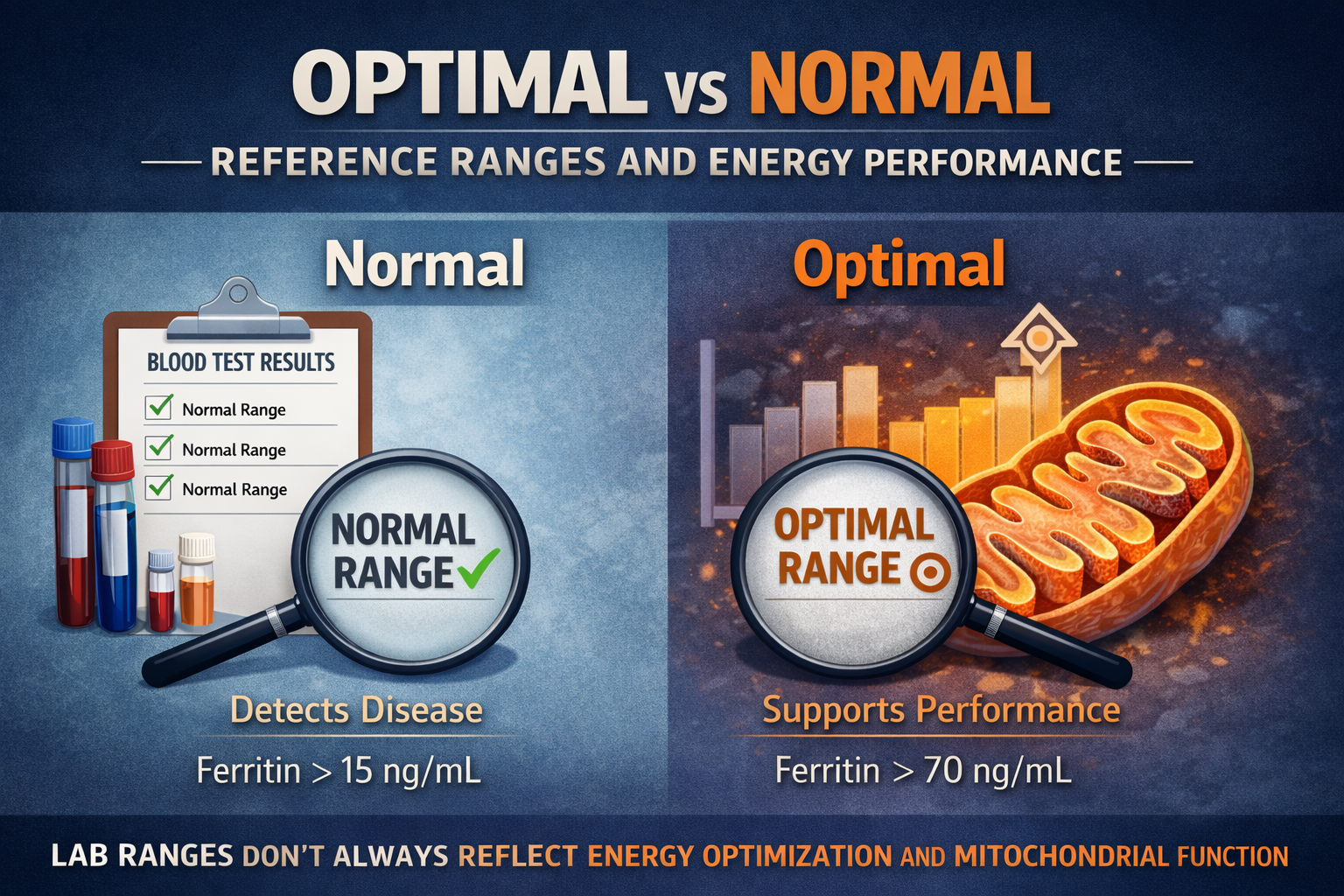
But “normal” does not automatically mean “optimal.”
And when the concern is energy, resilience, and performance — that distinction matters.
What Lab Reference Ranges Actually Represent
Most laboratory reference ranges are built statistically.
They reflect where approximately 95% of the population falls.
That means:
If your number is inside that range, it is considered typical.
But typical does not equal optimized.
Reference ranges are designed to detect overt disease.
They are not designed to define peak cellular efficiency.
Disease Detection vs Performance Optimization
There are two separate questions:
-
Is there pathology?
-
Is the system functioning at high efficiency?
These are different thresholds.
For example:
Ferritin below 15 ng/mL may indicate deficiency.
But some individuals report fatigue at higher levels — particularly when mitochondrial demand is elevated.
Magnesium may fall inside the standard serum range.
Yet intracellular magnesium can vary significantly.
TSH may be inside reference limits.
But thyroid hormone responsiveness at the cellular level may differ.
None of this implies disease.
It reflects spectrum physiology.
Why This Matters for Energy
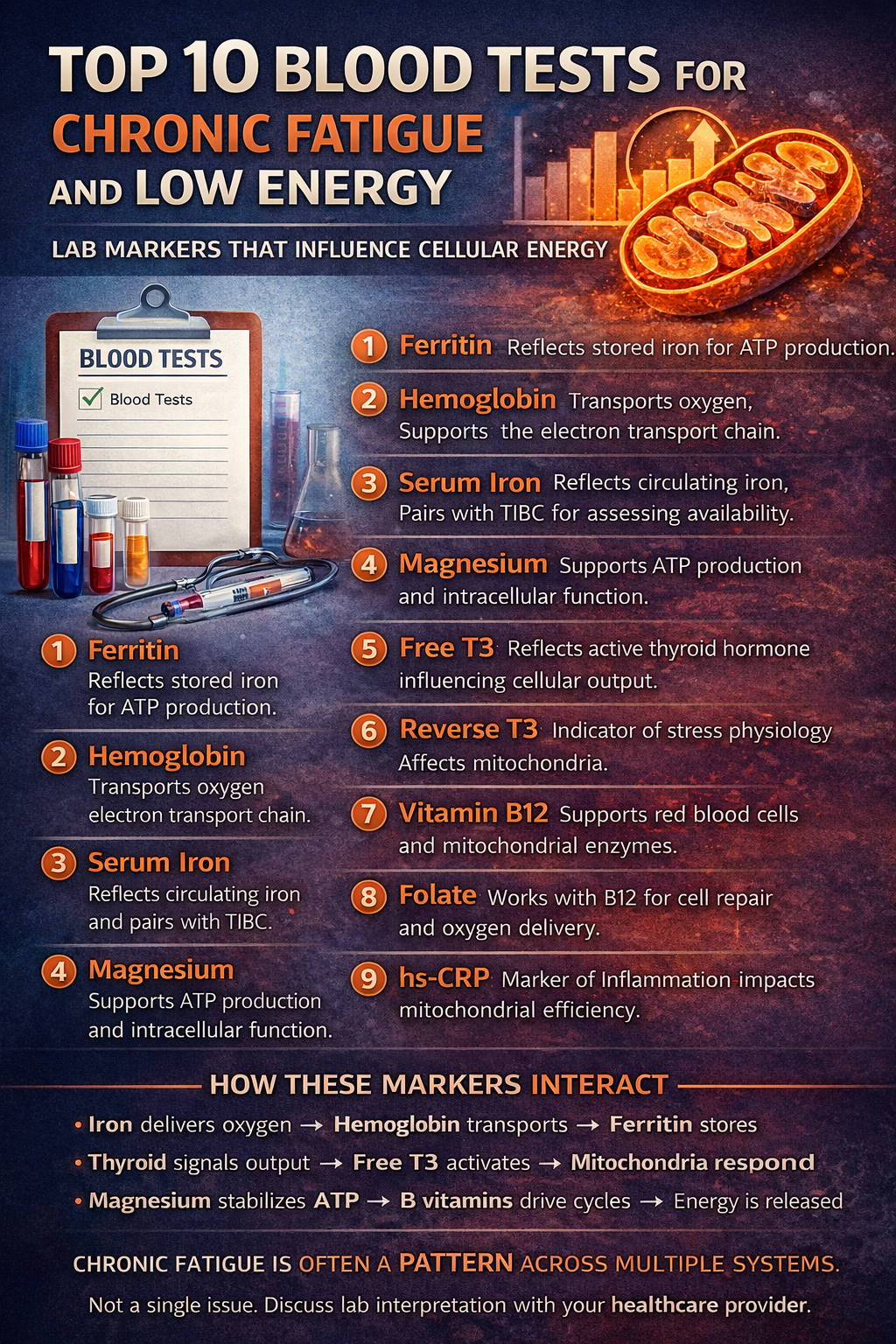
Energy production depends on:
• Iron reserves
• Magnesium availability
• Thyroid signaling
• B vitamin status
• Hydration and electrolytes
• Mitochondrial efficiency
If several markers sit in the lower third of the reference range, the system may technically be “normal” — but not robust.
This is why many people relate to:
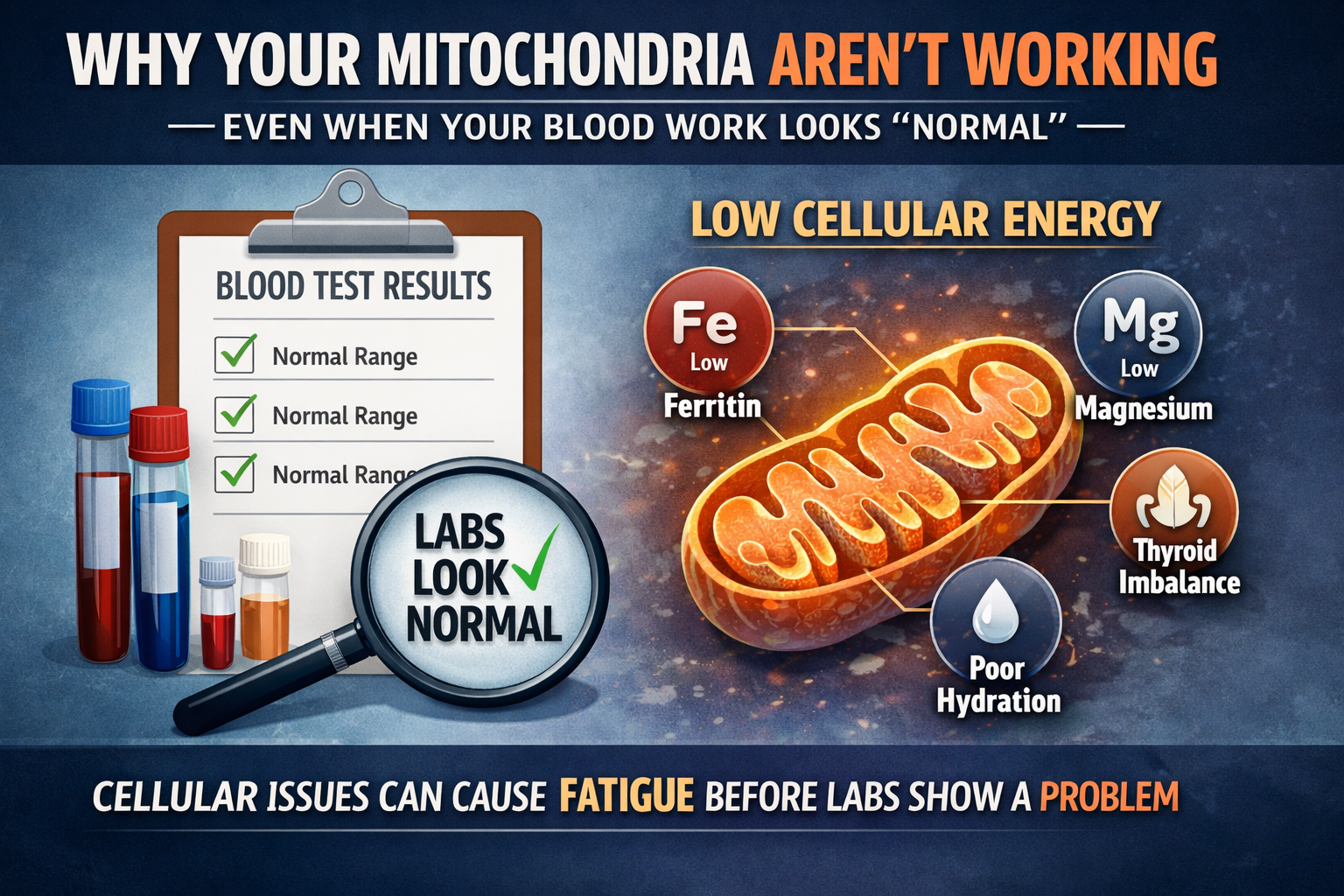
Why Am I Tired If My Labs Are Normal?
And:
Why Your Mitochondria Aren’t Working — And What Your Blood Work Reveals
Energy operates on gradients, not black-and-white categories.
A More Useful Framework
Instead of asking:
“Is this normal?”
A more helpful question may be:
“Is this supporting efficient cellular energy production?”
This shifts interpretation from disease-only to functional performance.
That perspective is outlined in:
Educational Blood Lab Interpretation Guide
It does not replace medical evaluation.
It expands context.
The Role of Pattern Recognition
Single numbers rarely tell the full story.
Patterns often reveal more:
Ferritin + Magnesium + TSH
Glucose + Triglycerides + HDL
CRP + Iron + Thyroid
Energy is rarely about one lab.
It’s about system alignment.
Research and References
Laboratory reference ranges are statistically derived from population samples and are designed primarily to identify overt disease rather than define optimal physiological performance.¹
Research has shown that reference intervals represent the central 95% of a sampled population — meaning individuals within that range may still experience symptoms depending on physiological demand and context.¹²
Iron deficiency without anemia has been associated with fatigue and reduced physical performance even when hemoglobin remains within reference limits.³
Magnesium plays a critical role in ATP stabilization and enzymatic function, with intracellular magnesium not always reflected accurately by serum levels alone.⁴
Thyroid hormones regulate mitochondrial respiration and energy production at the cellular level, supporting the concept that energy efficiency depends on more than a single TSH measurement.⁵
These findings reinforce an important distinction:
Reference ranges are designed to detect pathology.
Energy performance exists along a continuum.
References
-
Horn PS, Pesce AJ. Reference intervals: an update. Clin Chim Acta. 2003.
-
Katayev A, et al. Establishing reference intervals for clinical laboratory test results. Am J Clin Pathol. 2010.
-
Haas JD, Brownlie T. Iron deficiency and reduced work capacity. Am J Clin Nutr. 2001.
-
Romani AM. Magnesium in health and disease. Arch Biochem Biophys. 2013.
-
Mullur R, et al. Thyroid hormone regulation of metabolism and mitochondrial function. Physiol Rev. 2014.
Final Perspective
Normal means common.
Optimal means supportive of performance.
If you feel well, no change may be needed.
If fatigue persists despite normal labs, it may be worth evaluating patterns — not just thresholds.
This article is educational in nature and not intended to diagnose or treat medical conditions.
FAQ Section
What is the difference between normal and optimal lab ranges?
Normal ranges are statistical averages used to detect disease. Optimal ranges consider functional performance and energy efficiency.
Can labs be normal but still contribute to fatigue?
Yes. Multiple markers within reference ranges may still sit at levels that do not fully support mitochondrial efficiency.
Are optimal ranges officially recognized?
Most standard labs use disease-detection ranges. Functional or optimal ranges are derived from clinical experience and performance-focused frameworks.
Should lab interpretation replace medical care?
No. Lab interpretation should complement — not replace — professional medical evaluation.