Inflammation Is an Energy Thief: How CRP, Iron, and Thyroid Conversion Fit the Cellular Energy Framework
You can sleep eight hours, drink coffee, even “eat clean” — and still feel like your battery never reaches 100%.
One overlooked reason: low-grade inflammation.
Inflammation isn’t just about swollen joints or a sore throat. It’s a whole-body signal that can quietly change how your cells make energy, how you handle iron, and how efficiently you convert thyroid hormone into the form your tissues actually use.
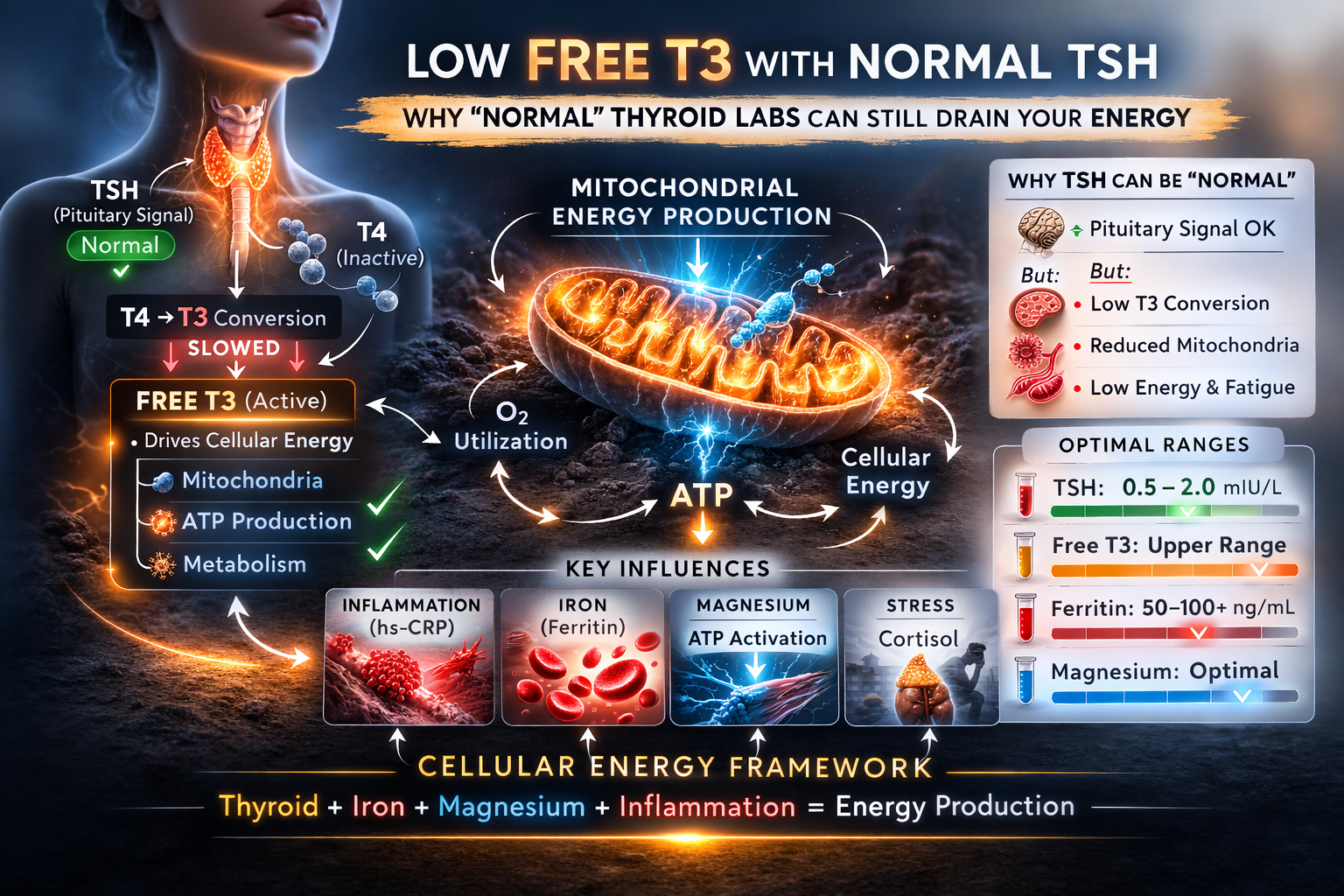
In the Cellular Energy Framework, inflammation is a common “hidden brake” that explains why people feel tired even when standard labs look fine. (See: Cellular Energy Framework)
1) Why inflammation drains cellular energy
Inflammation is driven by signaling molecules (often called cytokines). These signals can shift cells into a defensive mode — and that defensive mode can reduce efficient mitochondrial energy production (ATP), partly through oxidative stress and altered respiratory-chain function.
What that feels like in real life:
-
Heavy fatigue that doesn’t match your schedule
-
Brain fog and “low motivation” that feels physical, not mental
-
Slower recovery after workouts
-
A general sense of running at 70%
If your fatigue story is “my labs are normal,” start here: Why Am I Tired If My Labs Are Normal?
2) The lab marker most people miss: hs-CRP
One of the simplest inflammation markers is high-sensitivity C-reactive protein (hs-CRP).
A widely used risk interpretation:
-
< 1 mg/L (lower inflammation burden)
-
1–3 mg/L (moderate)
-
> 3 mg/L (higher)
Important: hs-CRP is non-specific — it doesn’t tell you why inflammation is up, but it often tells you that something is up.
For the bigger picture on reading markers in context: Blood Lab Interpretation Guide
3) The inflammation–iron trap (why ferritin can be confusing)
Inflammation can increase a hormone called hepcidin, which reduces iron absorption and makes iron less available for use. That’s one reason people can feel tired with “not terrible” iron-looking labs — the body may be withholding iron as part of an immune-defense strategy.
This matters because:
-
Iron is required for oxygen handling and energy pathways
-
Low iron availability can mean poor endurance, shortness of breath with exertion, fatigue, cold intolerance
If this is your lane, you’ll also want: Iron, Ferritin, and Fatigue: How Low Iron Can Affect Cellular Energy and Low Ferritin but Normal Hemoglobin: Why You Can Still Feel Exhausted
4) Inflammation and “normal thyroid labs”
Even when TSH and T4 look “fine,” inflammation signals can affect thyroid hormone activation at the tissue level — specifically the conversion steps involved in producing active T3 in peripheral tissues.
That’s why some people feel “hypothyroid-ish” (cold, foggy, slow) while being told everything is normal.
Related reading: Thyroid and Mitochondrial Energy: Why “Normal” Labs Can Still Leave You Exhausted and Low Free T3 With Normal TSH: When Thyroid Labs Miss the Energy Problem
5) What raises hs-CRP in real life (common patterns)
This is not a diagnosis list — just common drivers that show up again and again:
-
Poor sleep / sleep apnea patterns
-
Chronic stress load
-
Blood sugar swings and ultra-processed foods
-
Sedentary weeks followed by “hero workouts”
-
Gum inflammation
-
Low-grade infections
-
Excess alcohol
-
Higher waist circumference / metabolic strain
If you want the energy lens on this: What Your Blood Work Reveals About Fatigue — And Why Your Mitochondria Aren’t Working
6) Where this fits in the Cellular Energy Framework
Think of inflammation as a system-wide friction setting.
Even if you have decent nutrients, decent thyroid numbers, and decent hydration, inflammation can keep cells from converting those inputs into consistent energy.
Start with the framework overview: Cellular Energy Framework
Then deepen the root-cause lens: Mitochondrial Dysfunction
FAQs
What is hs-CRP and why does it matter for fatigue?
hs-CRP is a blood marker that reflects overall inflammation burden. It’s non-specific, but higher values often correlate with “low energy physiology,” especially when combined with fatigue symptoms and other pattern markers.
Can inflammation affect iron labs?
Yes. Inflammation can raise hepcidin, which reduces iron absorption and limits iron availability, contributing to fatigue even when hemoglobin looks okay.
Can inflammation affect thyroid hormone activation?
Inflammatory signaling can influence thyroid hormone conversion pathways at the tissue level, which can contribute to low-energy symptoms even when standard thyroid labs appear normal.
If my hs-CRP is high, does that mean I’m sick?
Not necessarily. hs-CRP is non-specific. It can rise from infection, injury, chronic stress, metabolic strain, poor sleep, gum inflammation, and many other factors. It’s a “signal,” not a diagnosis.
References
-
CDC/AHA scientific discussion of hs-CRP interpretation and risk categories
-
Review evidence on inflammatory signaling and mitochondrial dysfunction/ATP effects
-
Review on hepcidin’s role in inflammation-related iron dysregulation
-
IL-6–hepcidin axis evidence (hypoferremia/iron restriction)
-
Non-thyroidal illness/inflammation effects on deiodinase and thyroid hormone activation pathways