What Is Mitochondrial Dysfunction? Why You Can Feel Exhausted Even With Normal Blood Work
What Is Mitochondrial Dysfunction?
You sleep 7–8 hours.
Your doctor says your labs are normal.
Your blood work “checks out.”
And yet you still feel exhausted.
If this sounds familiar, you may be experiencing something that standard laboratory testing does not directly measure: mitochondrial dysfunction.
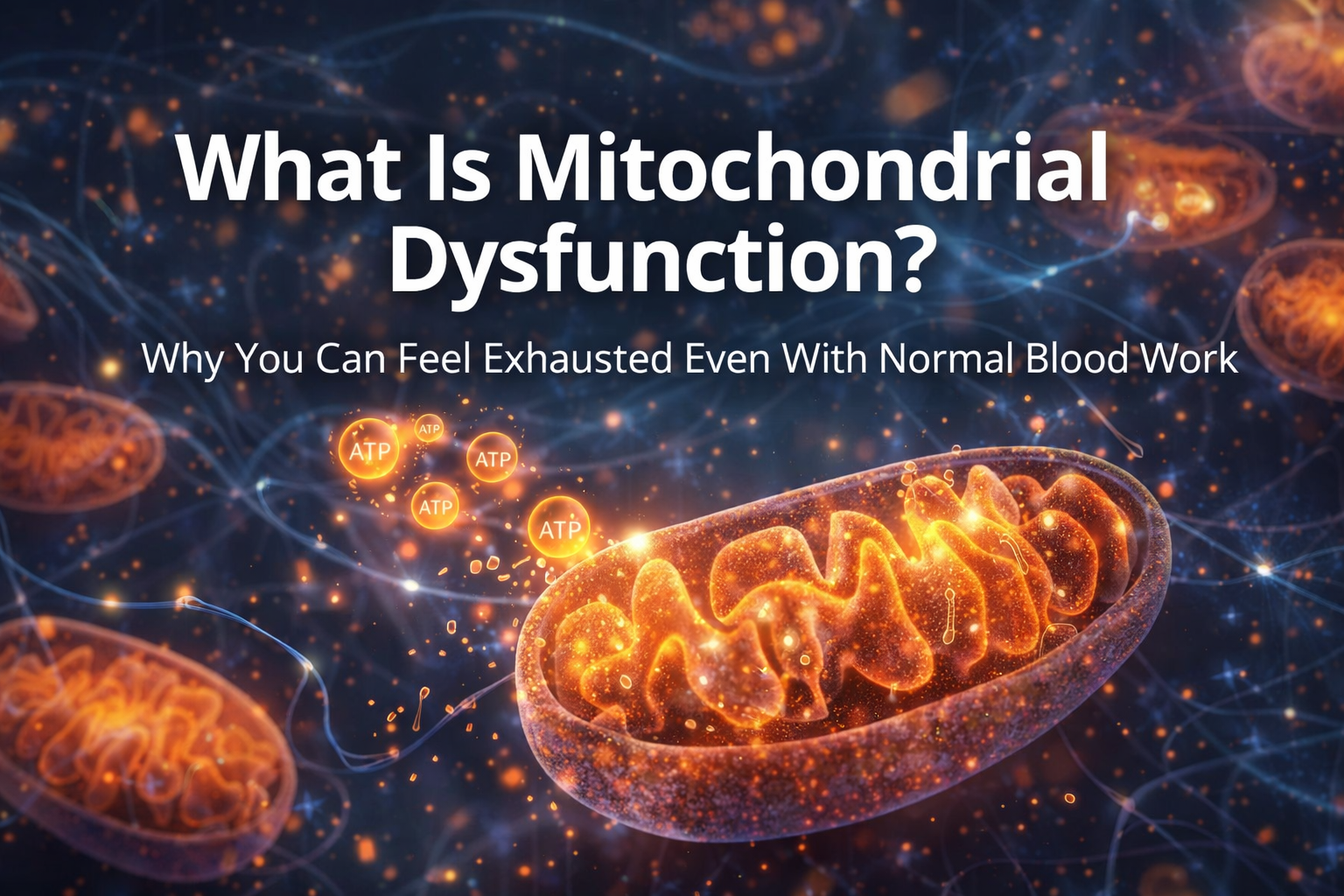
Mitochondria are the energy-producing structures inside nearly every cell in your body. Their job is to generate ATP (adenosine triphosphate), the molecule that powers brain activity, muscle contraction, detox pathways, hormone signaling, immune regulation, and circulation.
When ATP production becomes inefficient, energy declines — even if your routine blood markers remain within reference range.
The “Normal Labs” Trap
Most lab ranges are designed to detect disease — not to measure how efficiently your cells are functioning.
You can have:
-
Normal glucose
-
Normal thyroid
-
Normal CBC
-
Normal metabolic panel
And still experience:
-
Persistent fatigue
-
Brain fog
-
Cold hands and feet
-
Poor exercise tolerance
-
Slower recovery
-
Reduced motivation
This is the gap between disease detection and cellular optimization.
What Happens During Mitochondrial Dysfunction?
Mitochondria generate ATP through a complex process involving:
-
Oxygen delivery
-
Electron transport chain activity
-
Stable membrane potential
-
Nutrient cofactors
-
Oxidative balance
When any of these systems are impaired, ATP production efficiency drops.
This doesn’t automatically cause disease.
But it can create subtle, persistent fatigue patterns that don’t show up on routine panels.
Over time, reduced mitochondrial efficiency can influence:
-
Cognitive clarity
-
Inflammatory load
-
Metabolic stability
-
Circulatory efficiency
-
Cellular repair capacity
Understanding mitochondrial health shifts the conversation from isolated lab markers to overall cellular energy performance.
Why Modern Life Is Hard on Mitochondria
1️⃣ Chronic Dehydration
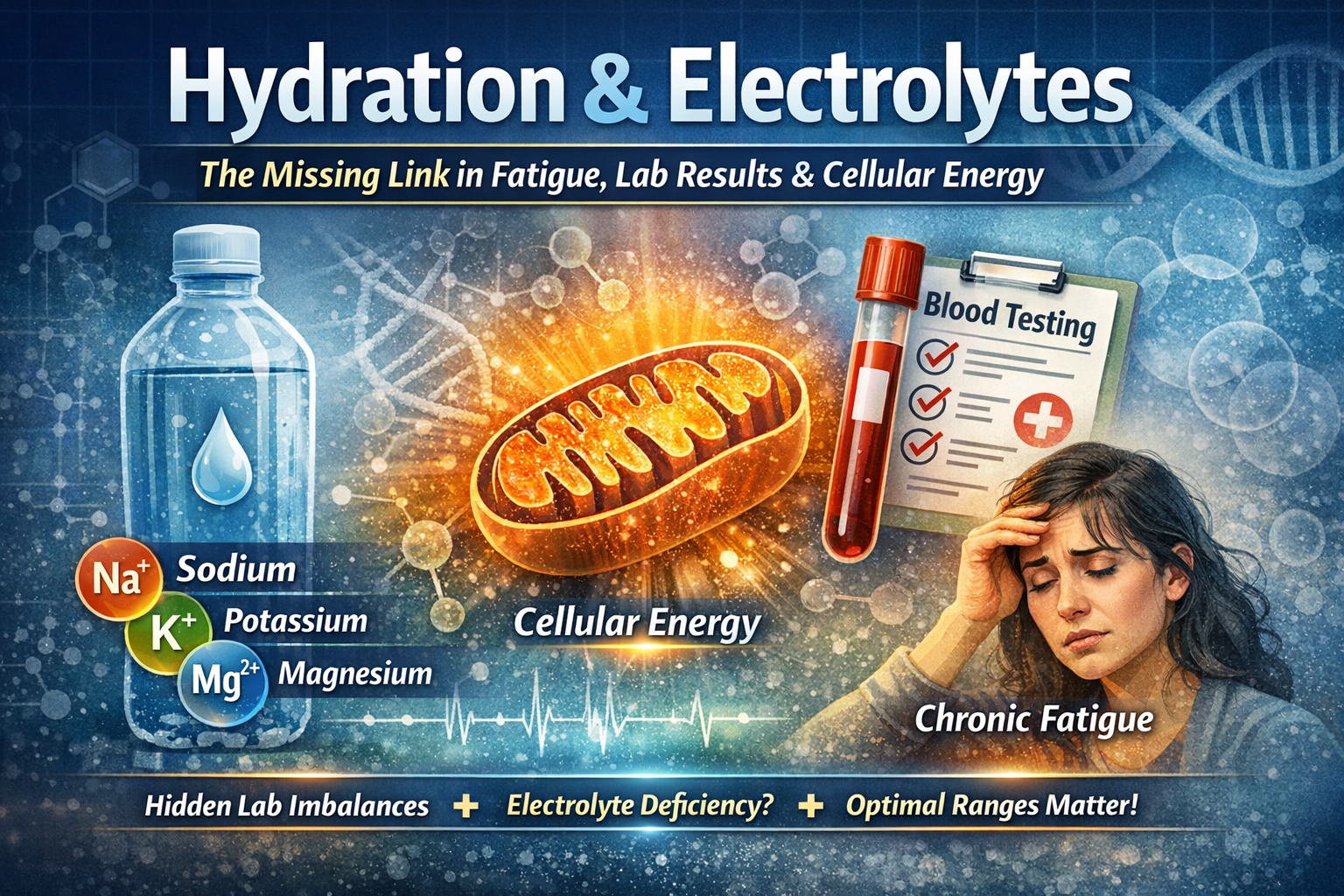
Mitochondria rely on proper hydration and mineral balance to maintain membrane potential — the electrical gradient necessary for ATP synthesis.
Even mild dehydration can affect:
-
Blood viscosity
-
Oxygen transport
-
Cellular voltage
Hydration is foundational to ATP production.
2️⃣ Blood Sugar Variability
Frequent glucose spikes increase oxidative stress and may damage mitochondrial DNA over time.
Even if fasting glucose appears “normal,” variability throughout the day can impair cellular energy efficiency.
Stable blood sugar supports stable ATP.
3️⃣ Oxidative Stress
Reactive oxygen species are natural byproducts of metabolism. When antioxidant defenses cannot keep pace, mitochondrial membranes become compromised.
This reduces ATP output efficiency and increases inflammatory signaling.
4️⃣ Chronic Stress
Elevated cortisol and inflammatory mediators reduce mitochondrial biogenesis — the creation of new mitochondria.
Stress is functionally anti-mitochondrial.
5️⃣ Nutrient Utilization Issues
Mitochondria require magnesium, B vitamins, CoQ10, alpha-lipoic acid, and trace minerals.
You may consume these nutrients — but absorption and cellular utilization matter more than intake alone.
This is where structured blood lab pattern analysis becomes valuable.
Can Mitochondrial Function Be Improved?
Mitochondria are dynamic and adaptable.
Research suggests mitochondrial efficiency can improve through:
-
Resistance training
-
Zone 2 aerobic conditioning
-
Stable blood sugar patterns
-
Electrolyte and mineral balance
-
Targeted antioxidant support
-
Red and near-infrared light exposure
-
Sleep optimization
These interventions support ATP production at the cellular level.
Improvement depends on consistency and underlying stress load.
What Lab Patterns May Suggest Mitochondrial Stress?
Routine panels do not measure ATP directly. However, certain patterns may suggest cellular energy inefficiency:
-
Elevated CRP
-
High-normal fasting glucose
-
Elevated fasting insulin
-
Low-normal CO₂
-
Low-normal magnesium
-
Elevated triglycerides
-
High BUN/creatinine ratio
No single marker confirms mitochondrial dysfunction.
Pattern recognition matters.
Why This Matters Long-Term
Energy influences everything.
When cellular energy declines:
-
Recovery slows
-
Cognitive clarity decreases
-
Inflammation increases
-
Metabolic resilience weakens
-
Aging accelerates
Mitochondrial efficiency is foundational to long-term health.
If you’re feeling tired despite normal labs, it may not be a disease process — it may be reduced ATP efficiency.
Understanding mitochondrial dysfunction provides context for symptoms that otherwise feel unexplained.
Where to Explore Further
If this topic resonates, start here:
• Educational Blood Lab Interpretation — understand how patterns matter more than isolated numbers.
• Why Am I Tired If My Labs Are Normal? — explore the symptom narrative and the “normal labs” trap.
• Mitochondrial Dysfunction — a deeper explanation of cellular energy and ATP production.
Together, these resources form a comprehensive educational framework around cellular energy and mitochondrial health.
Final Thought
Fatigue is not always pathology.
Sometimes it is inefficiency.
And inefficiency can often be improved.
Understanding mitochondrial health may be the missing layer between “normal” blood work and how you actually feel.