Hydration & Electrolytes: The Missing Link in Fatigue, Lab Results, and Cellular Energy
Most people think hydration means drinking more water.
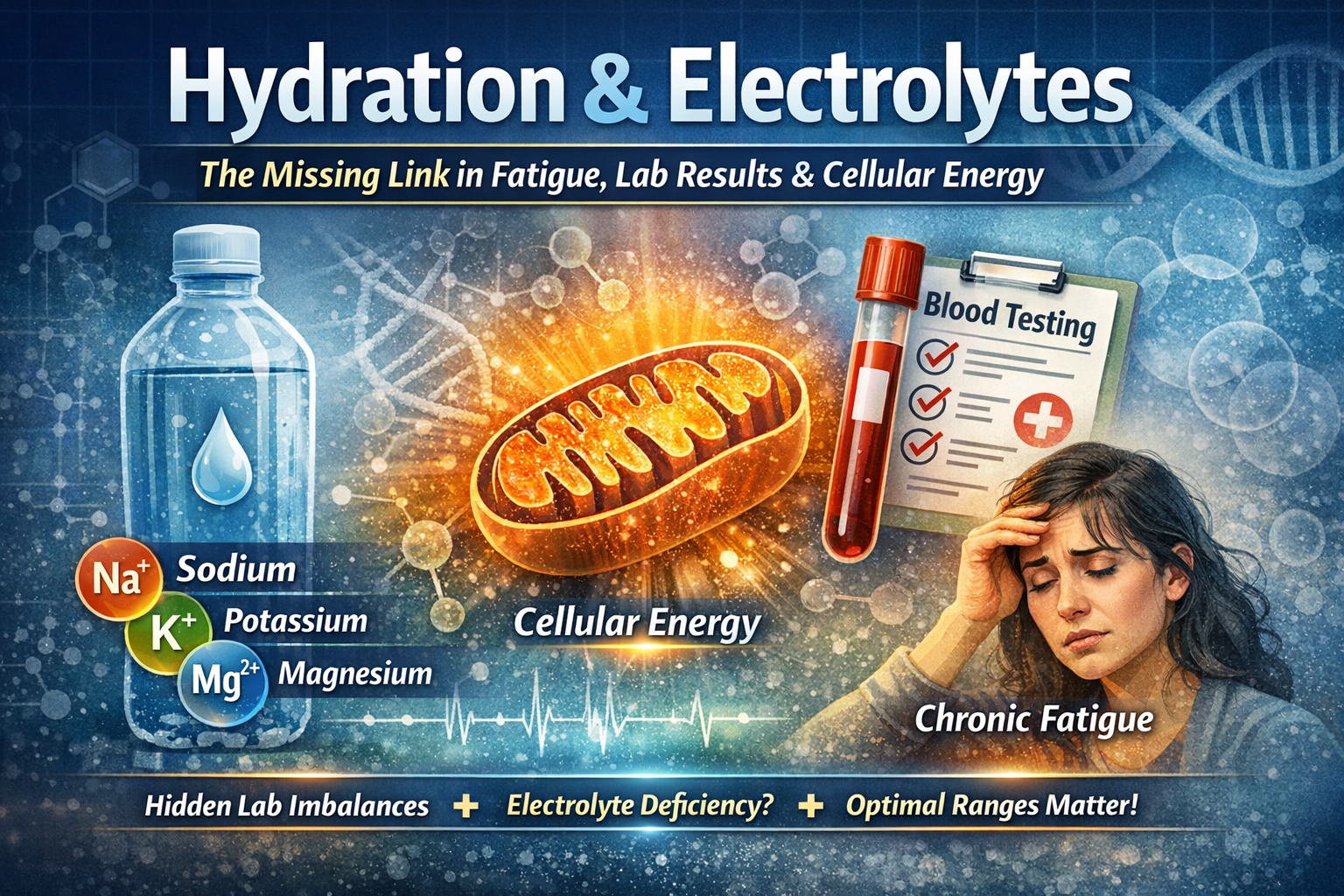
But hydration is not just about water — it’s about electrolytes, mineral balance, and how your cells produce energy.
If you feel tired, foggy, or “off” — even when your labs are “normal” — hydration may be one of the most overlooked contributors.
And the signs are often hiding inside your routine blood work.
Why Hydration Is More Than Just Water
Water without electrolytes doesn’t properly hydrate cells.
True cellular hydration depends on:
-
Sodium
-
Potassium
-
Magnesium
-
Chloride
-
Bicarbonate (CO₂)
These minerals regulate:
-
Nerve signaling
-
Muscle contraction
-
Blood pressure
-
Mitochondrial ATP production
-
Cellular energy transport
When electrolytes are imbalanced, cells struggle to function efficiently — even if you drink plenty of water.
Hydration is not just fluid intake.
It is electrical balance at the cellular level.
Hydration and Mitochondrial Energy
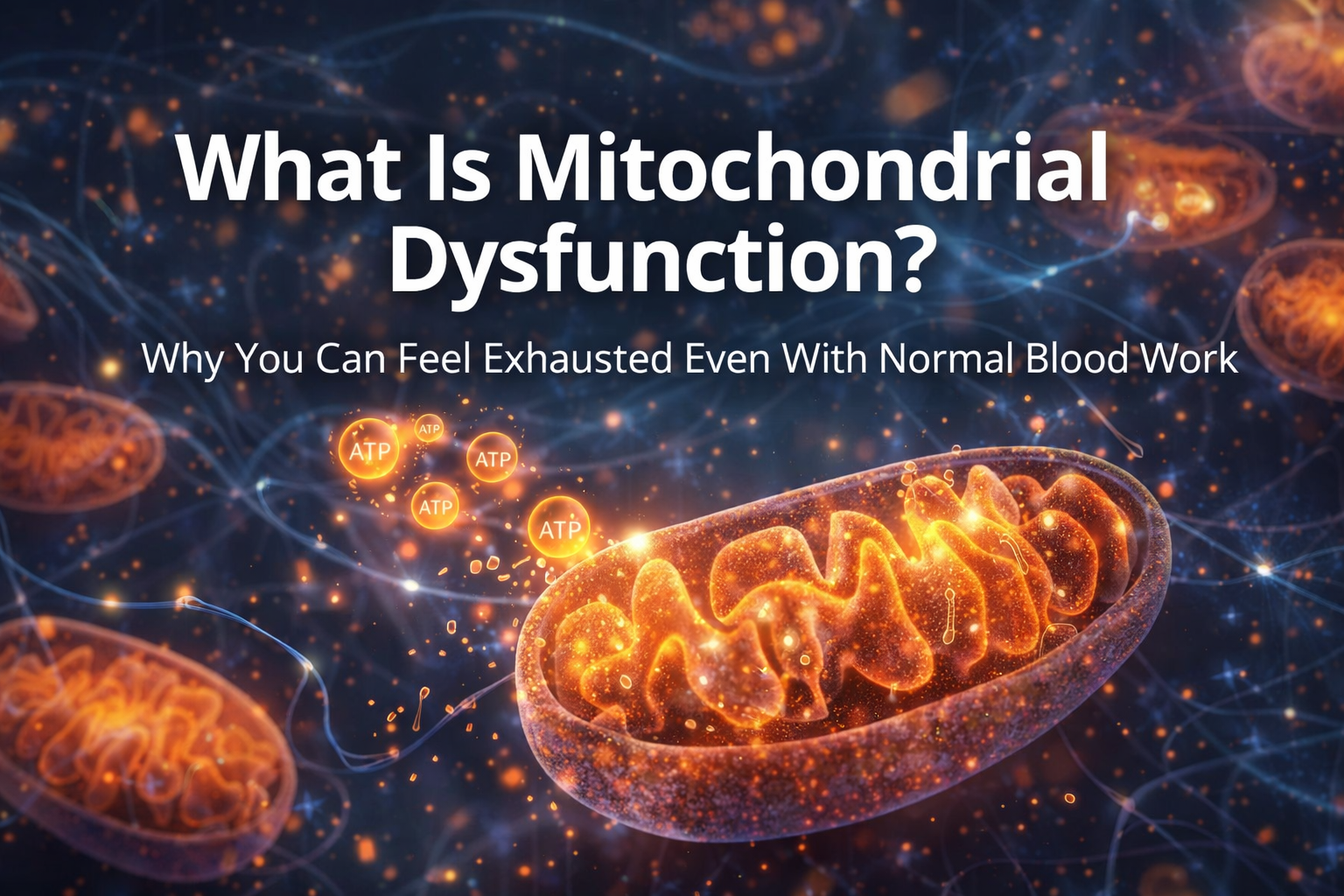
Your mitochondria — the energy engines of your cells — depend on mineral balance.
Electrolytes influence:
-
ATP production
-
Oxygen utilization
-
Glucose transport
-
Muscle recovery
-
Brain function
If magnesium is low, ATP cannot activate properly.
If sodium and potassium are imbalanced, cellular signaling becomes inefficient.
This is one reason hydration is closely connected to mitochondrial dysfunction.
👉 If you want to understand how cellular energy production impacts fatigue, read our guide on
Mitochondrial Dysfunction and Low Energy
Advanced Hydration Science: Cellular Osmosis and Energy Transfer
Hydration is fundamentally about osmosis — the movement of water across cell membranes.
Water follows mineral gradients.
Sodium and potassium create the electrical gradient that determines how water moves between:
-
Bloodstream
-
Interstitial space
-
Inside the cell
When this gradient is balanced, cells remain optimally hydrated and metabolically efficient.
When the gradient weakens:
-
Cellular water distribution shifts
-
ATP production becomes less efficient
-
Nutrient transport slows
-
Neurological signaling weakens
Even subtle electrolyte imbalance can reduce mitochondrial membrane potential — the driving force behind ATP generation.
The Sodium–Potassium Pump and Fatigue
Every cell relies on the sodium–potassium ATPase pump.
This pump:
-
Moves sodium out of the cell
-
Moves potassium into the cell
-
Uses ATP to maintain the gradient
When mineral balance is compromised, the pump becomes less efficient.
That inefficiency increases ATP demand.
Which increases fatigue.
Electrolyte imbalance doesn’t just reflect low energy.
It can increase the energy cost of staying alive.
How Dehydration Shows Up in Blood Work
Most people don’t realize hydration status can be evaluated through routine labs.
Markers often influenced by hydration include:
-
Sodium
-
Potassium
-
Chloride
-
CO₂ (bicarbonate)
-
BUN
-
Creatinine
-
BUN/Creatinine ratio
-
Hematocrit
-
Albumin
Mild dehydration may elevate certain markers without triggering a “high” flag.
That means your labs can be technically “normal” — yet trending outside optimal ranges.
This is where optimal range comparison matters.
If you’re unsure how to interpret your labs beyond reference ranges, read:
Educational Blood Lab Interpretation Guide
Functional Interpretation of Kidney Markers
Traditional interpretation asks:
“Are kidney markers abnormal?”
Functional interpretation asks:
“Are they trending toward imbalance?”
For example:
-
High-normal BUN with normal creatinine may reflect dehydration.
-
Elevated BUN/Creatinine ratio may reflect fluid imbalance.
-
High-normal hematocrit may reflect plasma volume shifts.
Patterns matter more than isolated numbers.
Hydration and Fatigue: Why “Normal” Isn’t Always Optimal
Many people ask:
“Why am I tired if my labs are normal?”
Hydration imbalance is one possible answer.
Subtle electrolyte shifts may not qualify as disease — but they can impact:
-
Energy levels
-
Exercise tolerance
-
Brain clarity
-
Muscle performance
-
Stress resilience
If your magnesium is low-normal…
If your sodium trends low…
If your BUN/Creatinine ratio is elevated…
You may be seeing hydration stress patterns.
If this sounds familiar, start here:
Why Am I Tired If My Labs Are Normal?
Hydration and the Autonomic Nervous System
Electrolytes influence:
-
Blood pressure regulation
-
Heart rate variability
-
Circulation
-
Stress response
Low sodium patterns may contribute to:
-
Dizziness when standing
-
Afternoon crashes
-
Brain fog under stress
Magnesium deficiency may contribute to:
-
Muscle tension
-
Poor sleep
-
Increased sympathetic activation
These are functional imbalances — not disease states.
But they affect how you feel every day.
Hydration and Inflammation
Subtle dehydration increases physiological stress.
It may:
-
Elevate cortisol demand
-
Increase oxidative stress
-
Strain kidney filtration
-
Amplify inflammatory signaling
Hydration imbalance can quietly contribute to chronic fatigue patterns by increasing systemic stress load.
Hydration and Blood Sugar Stability
Magnesium influences:
-
Glucose transport
-
Insulin receptor sensitivity
-
Cellular glucose uptake
Low magnesium patterns may contribute to:
-
Blood sugar swings
-
Energy crashes
-
Sugar cravings
-
Reduced insulin sensitivity
Hydration is directly linked to metabolic stability.
Common Hydration Mistakes
1. Drinking Excess Plain Water
Too much water without minerals can dilute sodium levels.
2. Ignoring Magnesium
Magnesium is critical for ATP activation and muscle relaxation.
3. Relying on Sports Drinks
Many are high in sugar and low in meaningful mineral content.
4. Not Considering Climate and Stress
Sweating, caffeine intake, stress, and exercise increase mineral demand.
Hydration is dynamic — not static.
Signs You May Have Electrolyte Imbalance
-
Persistent fatigue
-
Brain fog
-
Muscle cramps
-
Headaches
-
Dizziness on standing
-
Salt cravings
-
Poor workout recovery
These symptoms are common — and often dismissed.
But they may reflect subtle mineral shifts that don’t trigger disease markers.
Who Is Most Prone to Subclinical Imbalance?
-
High-stress professionals
-
Athletes
-
Low-carb dieters
-
Women in hormonal transition
-
High caffeine consumers
-
Individuals with chronic fatigue symptoms
These groups frequently present with “normal labs.”
But persistent symptoms.
What Optimal Hydration Looks Like
Optimal hydration means:
-
Stable sodium and potassium balance
-
Adequate magnesium levels
-
Healthy kidney markers
-
Balanced acid–base status
-
Proper fluid distribution inside cells
This requires more than “drink more water.”
It requires understanding your lab patterns.
Why “Drink More Water” Often Fails
Hydration depends on:
-
Mineral intake
-
Sweat rate
-
Stress load
-
Caffeine consumption
-
Exercise intensity
-
Climate
Excess water without electrolytes may worsen imbalance.
Hydration is about balance — not volume.
Hydration as a Foundational Pillar
Hydration interacts with:
-
Thyroid function
-
Iron status
-
Cortisol signaling
-
Mitochondrial efficiency
-
Inflammatory balance
-
Blood sugar regulation
It is foundational.
Ignoring hydration may limit progress in every other system.
How We Evaluate Hydration in Lab Analysis
In our Professional Blood Lab Analysis, hydration and electrolyte patterns are evaluated alongside:
-
Mitochondrial markers
-
Inflammatory markers
-
Iron status
-
Thyroid markers
-
Blood sugar regulation
Because hydration rarely acts alone.
Electrolyte imbalance often overlaps with:
-
Low magnesium
-
Stress patterns
-
Subclinical thyroid shifts
-
Early metabolic dysfunction
If you want a professional review of how your hydration markers compare to optimal ranges, you can upload your existing blood work here:
Professional Blood Lab Analysis — Starting at $97
The Bottom Line
Hydration is not a trend.
It is a foundational pillar of cellular health.
When electrolyte patterns shift — even subtly — mitochondrial efficiency shifts with them.
And when mitochondrial efficiency shifts, energy shifts.
Which affects:
-
Mood
-
Focus
-
Recovery
-
Resilience
-
Motivation
If you feel tired, foggy, or depleted…
It may not be a major disease.
It may be subtle electrolyte imbalance hiding inside “normal” labs.
Understanding the difference between normal and optimal can change everything.
If you're ready to understand what your labs actually mean — including hydration patterns — explore:
-
Educational Blood Lab Interpretation
-
Why Am I Tired If My Labs Are Normal?
-
Mitochondrial Dysfunction and Energy
Or upload your labs for professional review.