Ferritin Is “Normal” — So Why Are You Still Exhausted?
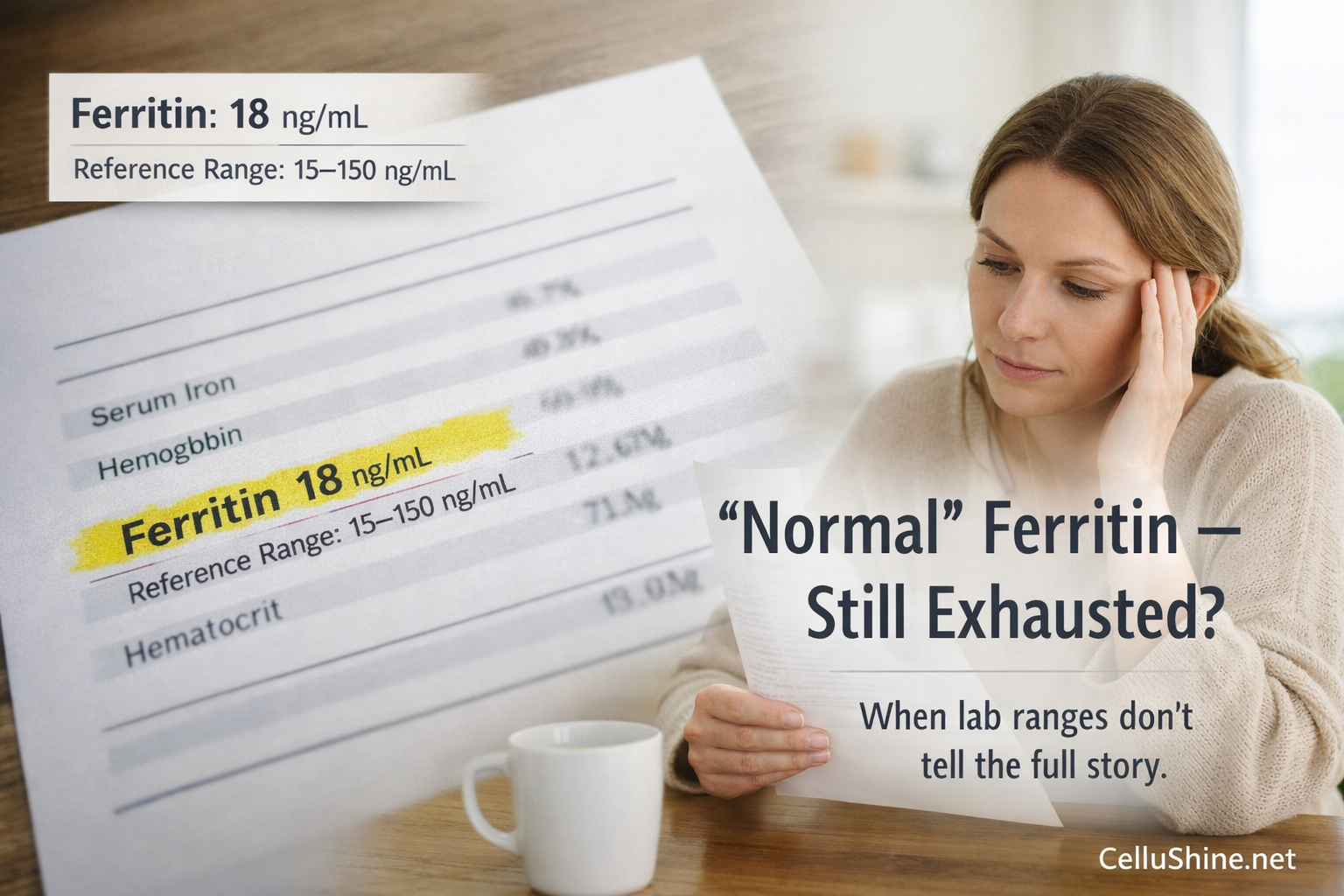
If your ferritin is normal but you still feel exhausted, you are not alone.
Many people experience:
-
Persistent fatigue
-
Brain fog
-
Cold sensitivity
-
Hair thinning
-
Poor exercise tolerance
Even when their iron labs are technically “within range.”
So what does ferritin actually mean — and why can you feel tired even if it’s normal?
What Is Ferritin?
Ferritin is a blood marker that reflects your stored iron.
It tells us how much iron your body has in reserve.
It is different from:
-
Serum iron (iron circulating in your blood)
-
Hemoglobin (oxygen-carrying protein in red blood cells)
-
Hematocrit (percentage of red blood cells)
You can have normal hemoglobin and still have low iron stores.
What Is a Normal Ferritin Level?
Most labs define normal ferritin as approximately:
-
15–150 ng/mL for women
-
30–400 ng/mL for men
Ranges vary slightly by laboratory.
These ranges are designed to detect anemia or disease — not optimize energy or performance.
That distinction matters.
If you’re trying to understand why normal labs don’t always mean optimal health, we explain that in more depth here:
👉 Why Am I Tired If My Labs Are Normal?
Can You Be Tired With Normal Ferritin?
Yes.
Some people experience fatigue when ferritin is technically within range but on the lower end.
In educational, optimization-focused lab interpretation, ferritin levels that are low-normal may still correlate with symptoms such as:
-
Fatigue
-
Exercise intolerance
-
Brain fog
-
Restless legs
-
Hair shedding
-
Cold hands and feet
This does not mean disease is present.
It means the level may not be optimal for that individual.
Why Doctors May Not Flag Low-Normal Ferritin
Standard lab reference ranges are built to identify pathology.
They answer the question:
“Is this dangerous?”
They do not answer the question:
“Is this optimal for energy, hormone balance, or mitochondrial function?”
If ferritin is not low enough to meet criteria for iron deficiency anemia, it may not be addressed.
But fatigue often appears before anemia develops.
To understand how optimal range interpretation differs from standard medical range interpretation, read:
👉 Educational Blood Lab Interpretation Guide
Ferritin and Fatigue: A Pattern Problem
Ferritin should not be evaluated alone.
Fatigue is rarely caused by one number.
A complete fatigue pattern often includes reviewing:
-
Ferritin
-
Serum iron
-
Transferrin saturation
-
Total iron-binding capacity (TIBC)
-
Vitamin B12
-
Vitamin D
-
Thyroid markers
Low energy is typically a systems issue, not a single lab issue.
FAQ: Ferritin and Exhaustion
Is ferritin 20 normal?
Yes, many labs would mark 20 as within range.
However, some individuals may experience symptoms at that level.
Can low ferritin cause fatigue without anemia?
Yes. Fatigue can occur before hemoglobin drops into anemic range.
Should ferritin be above 50?
There is no universal optimal number. Individual context matters, and interpretation should consider symptoms and other markers.
What To Do If Your Ferritin Is “Normal” But You’re Exhausted
If your labs were reviewed quickly and you still feel unwell, it may help to examine them through a more detailed, pattern-based lens.
We provide structured educational blood lab interpretation focused on optimal ranges and fatigue-related markers.
If you’ve had recent blood work and want a deeper review, you can learn more here:
👉 Analyze My Labs – Educational Review
Because sometimes the issue isn’t that nothing is wrong.
It’s that no one connected the dots.