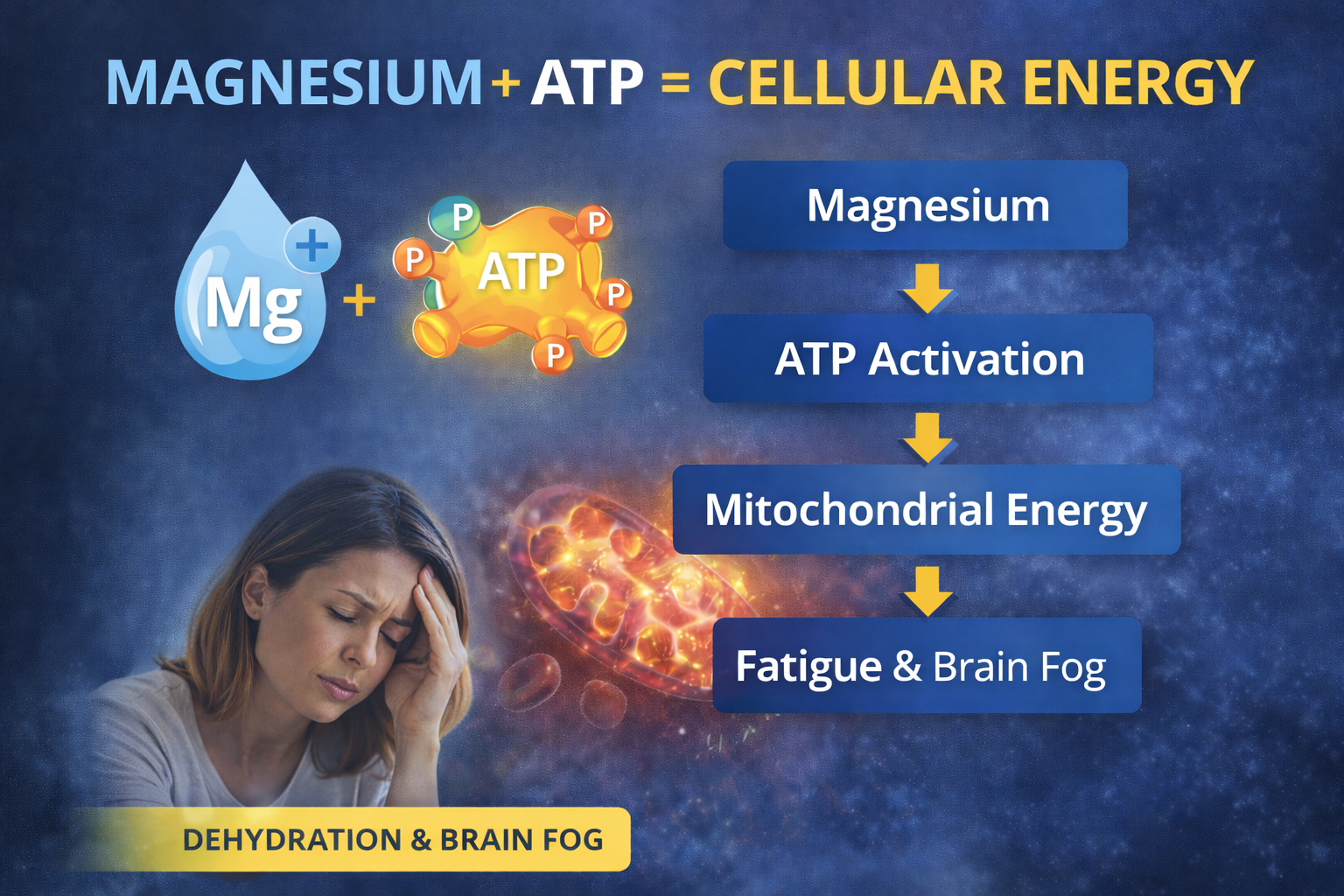
Magnesium and ATP: Why This Mineral Is Essential for Cellular Energy
Magnesium and ATP: The Foundation of Cellular Energy
Magnesium is one of the most important minerals in the human body. It participates in more than 300 biochemical reactions, many of which are directly involved in energy production.
One of magnesium’s most important roles involves ATP (adenosine triphosphate) — the molecule that provides energy for nearly every process in the body.
ATP is often described as the energy currency of the cell.
However, ATP does not function properly without magnesium.
In biological systems, ATP is typically present in the form of Mg-ATP, meaning ATP bound to magnesium. Without sufficient magnesium, ATP becomes less effective at powering cellular processes.
How Magnesium Supports Energy Production
Inside each cell are structures called mitochondria.
Mitochondria produce ATP through a process known as oxidative phosphorylation, which occurs in the electron transport chain.
Magnesium supports this process by:
• stabilizing ATP molecules
• supporting enzyme activity involved in metabolism
• assisting glucose metabolism
• supporting nerve and muscle function
Because of this, magnesium plays a central role in maintaining healthy cellular energy production.
You can learn more about this process in our guide on:
Cellular Energy Framework
https://cellushine.net/pages/cellular-energy-framework
Signs Magnesium Levels May Be Low
Magnesium insufficiency is relatively common and can affect several physiological systems.
Symptoms sometimes associated with low magnesium levels include:
• fatigue
• brain fog
• muscle cramps
• headaches
• poor sleep
• anxiety or irritability
• irregular heart rhythm
These symptoms occur because magnesium influences nerve signaling, muscle contraction, and metabolic function.
Magnesium and Brain Function
The brain requires a significant amount of energy to maintain normal function.
Magnesium supports neurological health by helping regulate:
• neurotransmitter signaling
• nerve cell stability
• energy metabolism in brain cells
When magnesium availability is low, some individuals report difficulty concentrating, mental fatigue, or increased sensitivity to stress.
This is one reason magnesium is frequently discussed in relation to brain fog and cognitive performance.
Magnesium and Hydration
Magnesium also interacts closely with electrolyte balance.
Electrolytes help regulate fluid balance, nerve signaling, and muscle function. Magnesium works alongside other minerals such as potassium and sodium to maintain proper cellular hydration.
To learn more about this relationship, see our guide on:
Hydration and Electrolytes
https://cellushine.net/pages/hydration-electrolytes
Why Magnesium Levels May Decline
Several factors may influence magnesium status.
These include:
• poor dietary intake
• chronic stress
• high sugar consumption
• certain medications
• gastrointestinal absorption issues
Because magnesium is involved in many metabolic processes, increased stress or metabolic demand may also increase magnesium requirements.
Why Magnesium May Matter Even When Labs Look “Normal”
Standard blood tests typically measure magnesium levels in the bloodstream.
However, only a small portion of total body magnesium is present in blood. Most magnesium is stored inside cells or in bone tissue.
Because of this, some individuals may experience symptoms related to magnesium insufficiency even when blood magnesium levels fall within standard reference ranges.
This concept is discussed in our guide:
Optimal vs Standard Lab Ranges
https://cellushine.net/pages/optimal-vs-standard-lab-ranges
Looking at Lab Patterns
Energy metabolism often involves interactions between several nutrients and metabolic markers.
These may include:
• magnesium
• ferritin and iron
• vitamin D
• B vitamins
• thyroid hormones
Looking at these markers together may provide a broader picture of metabolic function.
To learn more about how these markers are evaluated, visit:
Blood Lab Interpretation Guide
https://cellushine.net/pages/educational-blood-lab-interpretation
When It May Help to Review Your Labs
If you experience persistent fatigue, brain fog, or low energy despite “normal” blood tests, reviewing your labs from a broader metabolic perspective may provide useful insights.
Many people find that symptoms relate to patterns across multiple markers, rather than a single abnormal value.
You can learn more about this educational approach by visiting:
FAQ Section
Why does magnesium affect ATP?
Magnesium binds directly to ATP to form Mg-ATP, the biologically active form used by enzymes to produce cellular energy.
Can low magnesium cause fatigue?
Yes. Magnesium is involved in energy metabolism and nerve function. Insufficient magnesium may contribute to fatigue, muscle weakness, and poor recovery.
Can magnesium affect brain fog?
Magnesium influences neurotransmitter signaling and cellular energy production in the brain, which may influence mental clarity.
What foods contain magnesium?
Foods naturally rich in magnesium include:
• leafy green vegetables
• nuts and seeds
• whole grains
• legumes
• dark chocolate
References
-
de Baaij JHF et al. Magnesium in man: implications for health and disease. Physiological Reviews. 2015.
-
Gröber U et al. Magnesium in prevention and therapy. Nutrients. 2015.
-
Barbagallo M, Dominguez LJ. Magnesium and aging. Current Pharmaceutical Design. 2010.