Why Am I So Tired All the Time in Lee’s Summit? Possible Causes of Fatigue
Feeling tired all the time is one of the most common complaints people experience today. Many residents of Lee’s Summit and the Kansas City metro area report persistent fatigue, low energy, or brain fog even when their blood tests are reported as normal.
Fatigue can affect work performance, mental clarity, physical endurance, and overall quality of life. While occasional tiredness is normal, ongoing fatigue may signal that something in the body’s metabolic systems is not functioning optimally.
Understanding the possible causes of fatigue is the first step toward identifying what might be contributing to low energy levels.
Common Symptoms That Often Accompany Fatigue
People who feel constantly tired often report additional symptoms such as:
• brain fog
• poor concentration
• low motivation
• headaches
• dizziness
• poor sleep
• muscle fatigue
• reduced exercise tolerance
These symptoms may appear gradually and are sometimes dismissed because routine blood tests do not show clear abnormalities.
Why Fatigue Can Occur Even When Labs Look “Normal”
Many standard lab tests are designed primarily to detect disease rather than subtle metabolic imbalances.
Someone can experience:
• dehydration
• nutrient insufficiency
• low iron stores
• metabolic stress
• inefficient cellular energy production
while still having values that fall within standard reference ranges.
This concept is explained in more detail in our guide:
Why Am I Tired If My Labs Are Normal?
https://cellushine.net/pages/why-am-i-tired-if-my-labs-are-normal
Possible Causes of Fatigue
Fatigue can have multiple contributing factors. Some of the most common include the following.
Hydration and Electrolyte Balance
Even mild dehydration may influence circulation, electrolyte balance, and cognitive performance. Proper hydration helps support nerve signaling, muscle function, and cellular metabolism.
Learn more about hydration and energy metabolism:
Hydration and Electrolytes
https://cellushine.net/pages/hydration-electrolytes
Iron and Ferritin Levels
Iron helps transport oxygen through the bloodstream. Low ferritin levels may affect oxygen delivery and cellular energy production, which can contribute to fatigue and reduced stamina.
Iron status is one of the many factors that may influence energy metabolism.
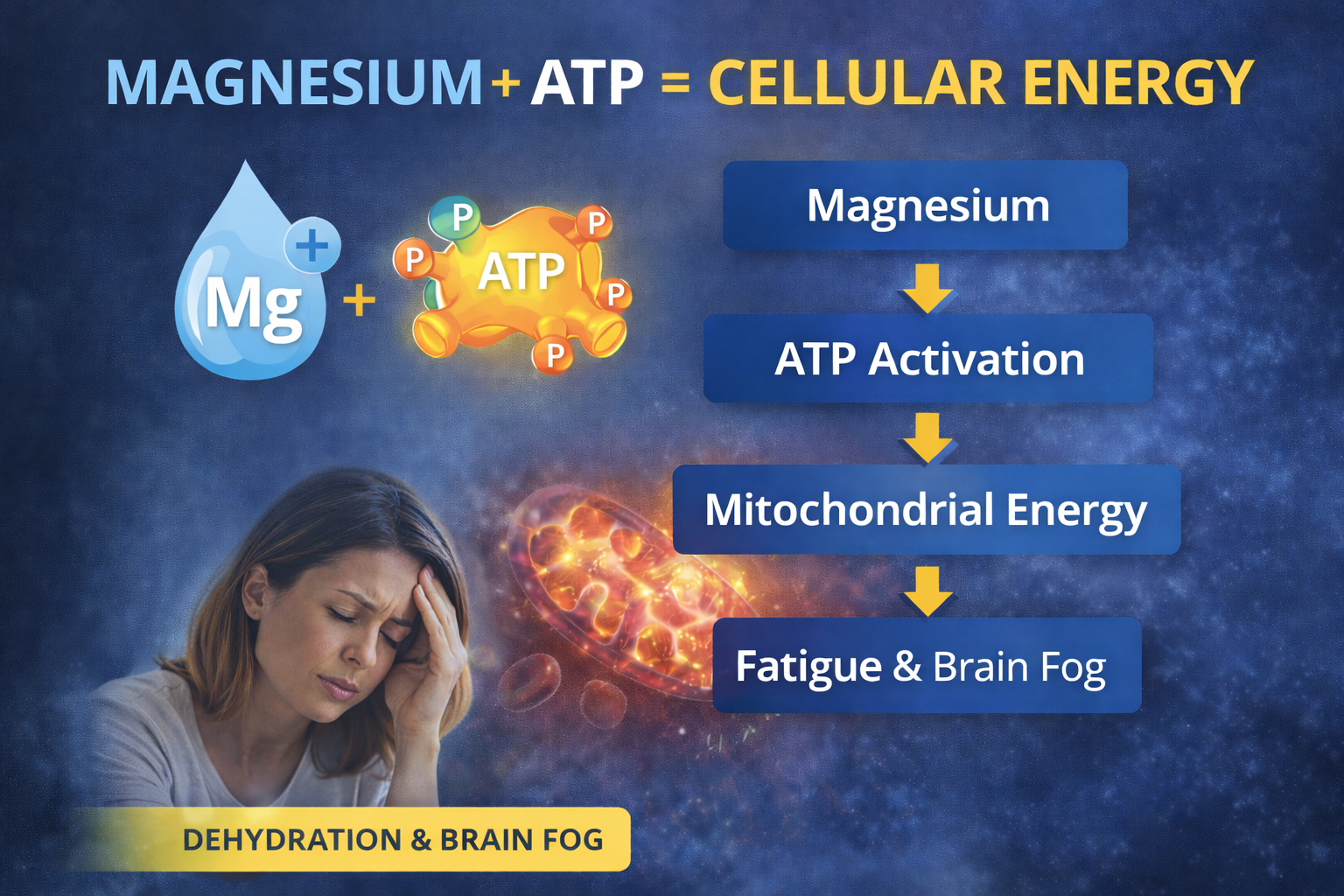
Magnesium and Energy Production
Magnesium plays an important role in ATP activation, which allows cells to produce usable energy. Without adequate magnesium, cellular metabolism may become less efficient.
Learn more about this process:
Cellular Energy Framework
https://cellushine.net/pages/cellular-energy-framework
Mitochondrial Energy Production
Inside each cell are mitochondria, which produce ATP — the primary energy molecule of the body.
When mitochondrial energy production becomes less efficient, symptoms such as fatigue, poor endurance, and brain fog may develop.
Learn more:
Mitochondrial Dysfunction
https://cellushine.net/pages/mitochondrial-dysfunction
Why Understanding Lab Patterns Matters
Many symptoms related to fatigue involve patterns across multiple lab markers, rather than a single abnormal value.
Markers sometimes evaluated in fatigue patterns include:
• ferritin
• vitamin D
• magnesium
• thyroid hormones
• inflammatory markers
• blood glucose regulation
Looking at these markers together may provide a broader picture of metabolic function.
You can learn more in our guide:
Blood Lab Interpretation
https://cellushine.net/pages/educational-blood-lab-interpretation
When It May Help to Have Your Labs Reviewed
If you live in Lee’s Summit or the Kansas City area and have experienced persistent fatigue despite normal lab results, reviewing your blood work from a broader perspective may provide useful insights.
Many people discover that the issue involves patterns across several markers, rather than one abnormal test result.
To learn more about this educational approach, visit:
Serving Lee’s Summit and the Kansas City Area
Our educational resources are available to individuals throughout the Kansas City metro area, including:
• Lee’s Summit
• Blue Springs
• Independence
• Raytown
• Grandview
• Overland Park
• Belton
• Raymore
Understanding how metabolic patterns influence energy levels can help people explore possible explanations for symptoms such as fatigue and brain fog.
Frequently Asked Questions
Why do I feel tired all the time?
Fatigue can result from many factors, including sleep quality, hydration, nutrient balance, metabolic stress, or underlying medical conditions.
Can dehydration cause fatigue?
Yes. Even mild dehydration can influence circulation, electrolyte balance, and cognitive function, which may contribute to fatigue and brain fog.
Why do my labs look normal if I feel exhausted?
Standard lab reference ranges are designed to detect disease. Subtle metabolic imbalances or early physiological stress may occur before lab values fall outside those ranges.
What lab markers are often related to fatigue?
Markers sometimes evaluated in fatigue patterns include ferritin, vitamin D, magnesium, thyroid hormones, inflammatory markers, and blood glucose regulation.
References
-
Armstrong LE et al. Hydration and cognitive performance. Nutrition Reviews.
-
Haas JD, Brownlie T. Iron deficiency and reduced work capacity. Journal of Nutrition.
-
de Baaij JHF et al. Magnesium in man: implications for health and disease. Physiological Reviews.