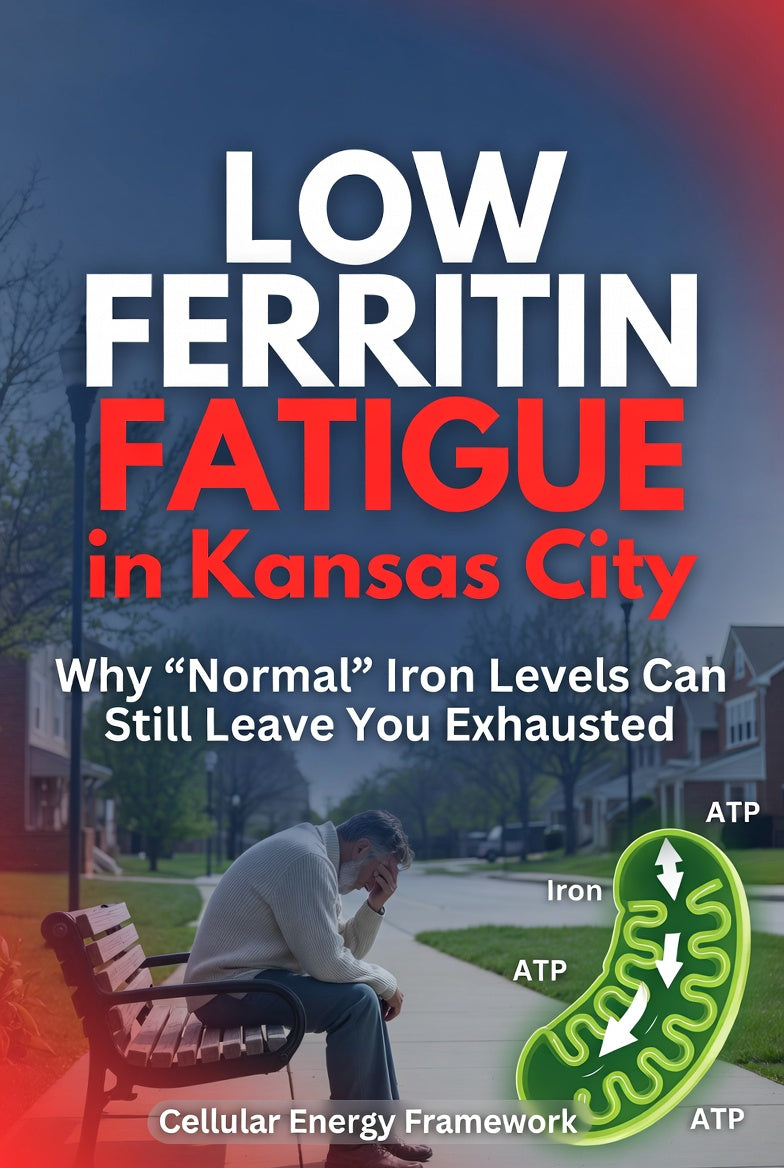
Iron Deficiency Fatigue in Lee’s Summit: How Low Ferritin Can Drain Your Energy
Many residents in Lee’s Summit and the broader Kansas City metro area describe a frustrating cycle: persistent tiredness, mental fog, and low motivation—even with solid sleep, regular exercise, and decent nutrition. Routine blood work often comes back "normal," leaving people wondering why their energy feels depleted.
One frequently overlooked culprit? Low ferritin—the body's stored form of iron. While iron is best known for preventing anemia, its deeper role in oxygen delivery, mitochondrial function, and ATP (cellular energy) production explains why subtle deficiencies can cause exhaustion long before anemia shows up.
This educational overview explores how low ferritin fits into the bigger picture of fatigue, drawing from patterns seen in blood lab interpretation.
Why Iron Is Essential for Cellular Energy
Iron supports multiple systems that determine daily vitality:
- Oxygen Transport: Iron in hemoglobin carries oxygen to tissues, fueling metabolic activity—especially in mitochondria, the cell's powerhouses.
- ATP Production: Iron is critical in the electron transport chain, the pathway that generates ATP, the body's primary energy currency.
When iron stores drop, these processes slow, leading to symptoms like:
- Persistent fatigue
- Reduced endurance during workouts or daily tasks
- Brain fog and poor focus
- Lower motivation
- Slower recovery from exercise or stress
These align with the Cellular Energy Framework, which views fatigue through the lens of ATP efficiency and metabolic health.
Ferritin: The Overlooked Iron Marker for Fatigue
Doctors typically check hemoglobin or serum iron first, but ferritin best reflects iron reserves—especially for energy-related complaints.
Low ferritin can signal iron deficiency without anemia: normal hemoglobin and circulating iron, but depleted stores. The body prioritizes iron for vital functions, shortchanging energy production.
Many in the KC area experience this—fatigue persists despite "normal" labs. Functional approaches often aim for ferritin levels of 50–100+ ng/mL (or higher) for optimal energy, cognitive function, and recovery—well above the standard lower limits (around 15–30 ng/mL for women) that focus on avoiding overt disease.
See how this fits broader patterns in the Metabolic Nutrient Framework and Nutrient Strategy Framework.
Why Normal Lab Results Can Miss Iron Issues
Standard reference ranges detect disease, not optimal metabolic function. Ferritin can sit in the "normal" zone while still being suboptimal for energy.
This "optimal vs. standard" gap is common in fatigue cases. Explore it further in Optimal vs Standard Lab Ranges Explained and Blood Test Markers That Affect Energy, Fatigue, and Brain Fog.
Factors Contributing to Low Iron Stores
Iron levels depend on several interconnected factors:
- Dietary Intake: Not enough iron-rich foods (e.g., red meat, leafy greens, legumes) over time depletes stores.
- Absorption Issues: Gut health, inflammation, or competing nutrients can hinder uptake.
- Increased Demand: Stress, intense exercise, growth phases, heavy periods, or illness recovery raise needs.
- Mineral Interactions: Copper aids iron utilization; imbalances (e.g., low copper) can worsen patterns. Magnesium supports related energy pathways—see Magnesium and ATP: Why It Matters for Energy and Fatigue.
These tie into the full Metabolic Nutrient Framework.
Iron, Hydration, and Energy Metabolism
Iron doesn't operate alone. Hydration affects oxygen/nutrient delivery, while inflammation can disrupt metabolism. Dehydration or electrolyte shifts amplify fatigue—explore this in Hydration & Electrolytes: The Missing Link in Fatigue, Lab Results, and Cellular Energy (or the related blog version here).
This supports CelluShine’s Hydration & Electrolytes pillar, including products like Hydrate™ for cellular support.
Iron and Fatigue in the Kansas City Metro
Fatigue tops health complaints in Lee’s Summit, Overland Park, Olathe, and Kansas City. Many hear "your labs are normal" yet feel drained—subtle patterns like low ferritin often explain it when viewed holistically.
For a local educational resource, see Blood Lab Interpretation Lee's Summit, which connects nutrient patterns, hydration, and cellular energy.
A Systems-Based Approach to Understanding Your Labs
Instead of isolating one marker, consider interactions:
- Iron panel (ferritin, transferrin, saturation)
- Nutrient synergies (e.g., copper, magnesium)
- Inflammation/energy markers
This educational lens helps uncover why energy lags. CelluShine focuses on interpreting these patterns to support better understanding—not diagnosis or treatment.
Visit the CelluShine homepage for the full educational model, or learn about our perspective on Functional Medicine in Lee’s Summit.
Ready to Explore Your Patterns?
If this resonates, upload your recent labs for an educational report highlighting potential energy-related insights (starting at $97). It’s a simple way to connect dots on ferritin, other markers, and your symptoms.
Get Your Personalized Lab Insights Today → Start Here
Continue Reading
- Iron, Ferritin, and Fatigue: How Low Iron Can Affect Cellular Energy
- Magnesium and ATP: Why It Matters for Energy and Fatigue
- The Cellular Energy Framework
- Hydration & Electrolytes: The Missing Link
- Optimal vs Standard Lab Ranges Explained
- Blood Test Markers That Affect Energy, Fatigue, and Brain Fog
References
- Camaschella C. Iron deficiency. New England Journal of Medicine.
- Beard JL. Iron biology in immune function and metabolism. Journal of Nutrition.
- Haas JD, Brownlie T. Iron deficiency and reduced work capacity. American Journal of Clinical Nutrition.
- Ganz T, Nemeth E. Iron homeostasis in health and disease. Nature Reviews Immunology.