Exhausted All the Time? Why So Many Moms Feel Tired — Even With Normal Labs
You wake up tired.
Not just “I stayed up too late” tired.
Not “the baby was up at 3 a.m.” tired.
A deeper tired.
The kind that sits in your bones.
Sometimes you sit in your car for five extra minutes before going inside — not because you don’t love your family, but because you don’t know where the energy is going to come from.
You pour coffee.
You pack lunches.
You sign permission slips.
You answer emails before 8 a.m.
You show up.
Because that’s what moms do.
But somewhere around 2:17 p.m., it hits.
The wall.
Your brain feels foggy.
Your patience runs thin.
Your body feels heavier than it should.
And then the thought creeps in:
Why am I this tired?
“But My Labs Are Normal.”
You’ve probably heard it.
“Everything looks fine.”
Your thyroid? In range.
Your iron? Normal.
Your blood sugar? Good.
So why do you feel like you’re running on fumes?
Here’s the truth most women are never told:
Standard lab ranges are built to detect disease — not to measure optimal energy.
There is a difference between “not sick” and “actually thriving.”
We break this down in detail here:
👉 Why Am I Tired If My Labs Are Normal?
You’re Not Crazy. There Is Data Behind This.
Research shows maternal fatigue is not rare.
In one study of mothers in the postpartum period, over 94% reported moderate to severe fatigue, and that fatigue was strongly linked to reduced overall health and daytime sleepiness. (Giallo et al., 2015)
And it doesn’t magically disappear.
Chronic sleep interruption, emotional labor, hormonal shifts, and sustained stress can compound for years — not weeks.
Nearly 12% of women report frequent sleep disruption due to children, and mothers consistently prioritize others’ sleep before their own.
You are not weak.
You are physiologically taxed.
It’s Not Just About Sleep
Sleep matters.
But if sleep were the only factor, a full weekend of rest would fix everything.
For many moms, it doesn’t.
Because energy is not just about hours asleep.
It’s about:
-
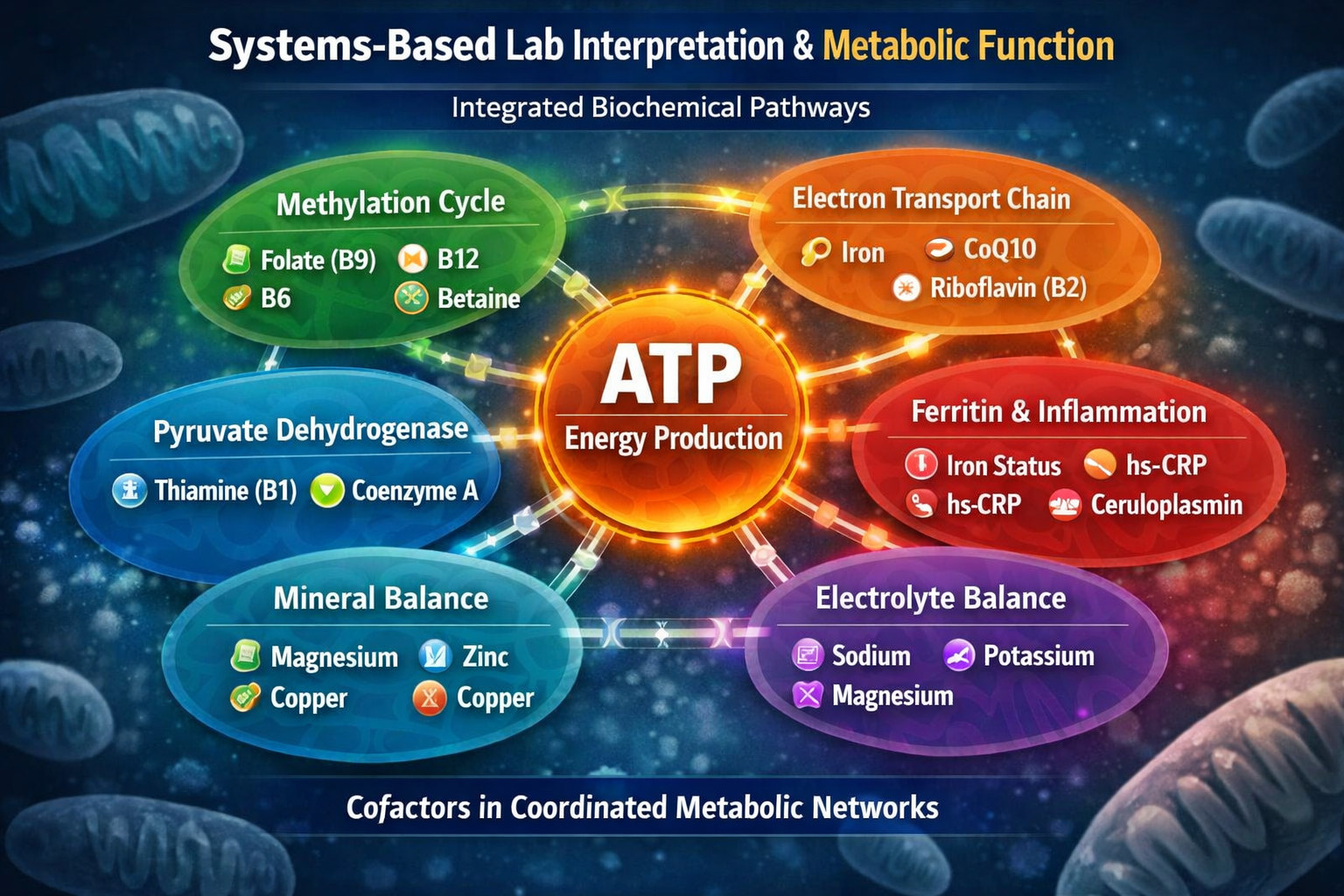
Iron stores that are technically “normal” but suboptimal
-
Magnesium levels that are inside range but insufficient
-
Thyroid markers that look fine individually but misaligned in pattern
-
B-vitamin status affecting cellular energy production
-
Hydration and electrolyte shifts
When multiple markers hover near the edge of reference ranges, your body compensates.
And compensation feels like fatigue.
We explain this systems-based pattern approach here:👉 Cellular Energy Framework
And the deeper interpretation model here:
👉 Metabolic Nutrient Framework
The Emotional Weight No One Talks About
There’s also something else.
The invisible load.
The scheduling.
The remembering.
The anticipating.
The worrying.
Parental burnout research shows that up to 14% of parents experience clinical levels of exhaustion, emotional distance, and overwhelm.
And that number doesn’t count the quiet, functioning moms who keep pushing through.
You’re not dramatic.
You’re overloaded.

When You’re the One Everyone Depends On
Dinner still has to be made.
Homework still needs help.
Appointments still get scheduled.
You don’t get to collapse.
So you push through the fog.
But here’s the part that hurts:
You don’t feel like yourself anymore.
You’re functioning.
But you’re not fully present.
And you miss the version of you that had energy left at 7 p.m.
“Maybe I’m Just Lazy.”
Let’s stop that right now.
If you are:
-
Getting up early
-
Showing up for your family
-
Carrying the mental load
-
Trying to improve your health
You are not lazy.
You are likely depleted.
And depletion is not a character flaw.
It’s biology.
What Real Answers Look Like
Instead of asking:
“Is this lab normal?”
We ask:
“What pattern is forming?”
Instead of looking at TSH alone, we look at the full thyroid pattern.
Instead of looking at iron in isolation, we examine ferritin, hemoglobin, red blood cell indices, and symptoms together.
Instead of focusing on one nutrient, we examine clusters.
This is what makes the difference between:
“You’re fine.”
And:
“Here’s what’s actually happening.”
Learn more about the difference between standard and optimal interpretation here:
👉 Optimal vs Normal Lab Ranges
Imagine This Instead
Imagine:
Waking up without dread.
Not needing three cups of coffee just to function.
Having patience left at bedtime.
Feeling clear during conversations.
Feeling strong in your own body again.
That’s not indulgent.
That’s baseline human energy.
FAQ: Moms, Energy, and the Truth About Feeling This Tired
Why do so many moms feel exhausted even with normal labs?
Because standard ranges detect disease, not optimization. Subtle nutrient imbalances, hormone shifts, stress load, and cumulative sleep debt can all impair energy production before labs flag a problem.
Is maternal fatigue common?
Yes. Research shows over 90% of postpartum women report significant fatigue, and long-term studies confirm that maternal exhaustion can persist well beyond infancy.
Could this be burnout instead of a medical issue?
Sometimes it’s both. Parental burnout affects up to 14% of parents and is linked to chronic stress and emotional overload. But burnout and physiological depletion often overlap.
If my thyroid is normal, can I still feel tired?
Yes. Thyroid interpretation requires pattern analysis, not just TSH alone. Free T3, Free T4, antibodies, and symptom patterns matter.
Is this just part of being a mom?
Fatigue is common — but constant depletion is not something you have to accept as permanent.
You Deserve Clarity.
If you’ve been told you’re fine — but you don’t feel fine — that doesn’t mean you’re broken. It means the conversation isn’t finished yet.
You deserve to feel like yourself again.
Start here:
👉 Understand What Your Labs Are Really Saying
Because sometimes the issue isn’t your body at all.
It’s that you’ve been trying to carry the weight alone — while the answers were sitting quietly in your numbers, waiting to be seen.