Best Vitamins for Fatigue in Lee’s Summit: What Nutrients Support Cellular Energy When Blood Tests Look Normal
Written by Dr. Rich Prather, DC
CelluShine | Lee’s Summit, Missouri
22+ Years Clinical Experience
When your energy looks fine on paper but not in real life
Some kinds of fatigue are easy to explain.
You stayed up too late. You had a stressful week. You skipped meals. You pushed too hard.
But a different kind of fatigue is harder to understand.
You get through the day, but it feels heavier than it should. Your focus slips earlier. Your motivation fades faster. By afternoon, even simple tasks can feel like they require too much effort.
So you do what most people do. You get blood work.
And then the answer comes back: everything looks normal.
For many people in Lee’s Summit, Blue Springs, Independence, and across the Kansas City metro, that result does not match real life. They still feel tired. They still feel foggy. They still feel like something is off.
One of the biggest reasons is that fatigue is often connected to cellular energy production, not just whether a lab marker has crossed into a disease range. This concept is explained in the Cellular Energy Framework, where blood marker patterns, nutrient availability, mitochondrial function, and metabolic stress all come together.
When these systems begin to slow down, fatigue can show up long before standard blood tests clearly flag a problem.
Why “normal” blood tests do not always explain fatigue
Most routine lab ranges are built to identify obvious disease, not to measure whether your body is operating at ideal metabolic efficiency.
That means a value can land inside the normal range and still be too low to fully support strong energy production, brain clarity, recovery, and resilience.
This is one reason people may still deal with:
• persistent fatigue
• brain fog
• poor concentration
• low motivation
• reduced stamina
That gap between standard lab ranges and optimal metabolic function is discussed in Optimal vs Standard Lab Ranges
If you understand that difference, it becomes much easier to see why a person can feel exhausted even when their labs appear “fine.”
The nutrients that most often support cellular energy
Energy production is not controlled by one vitamin.
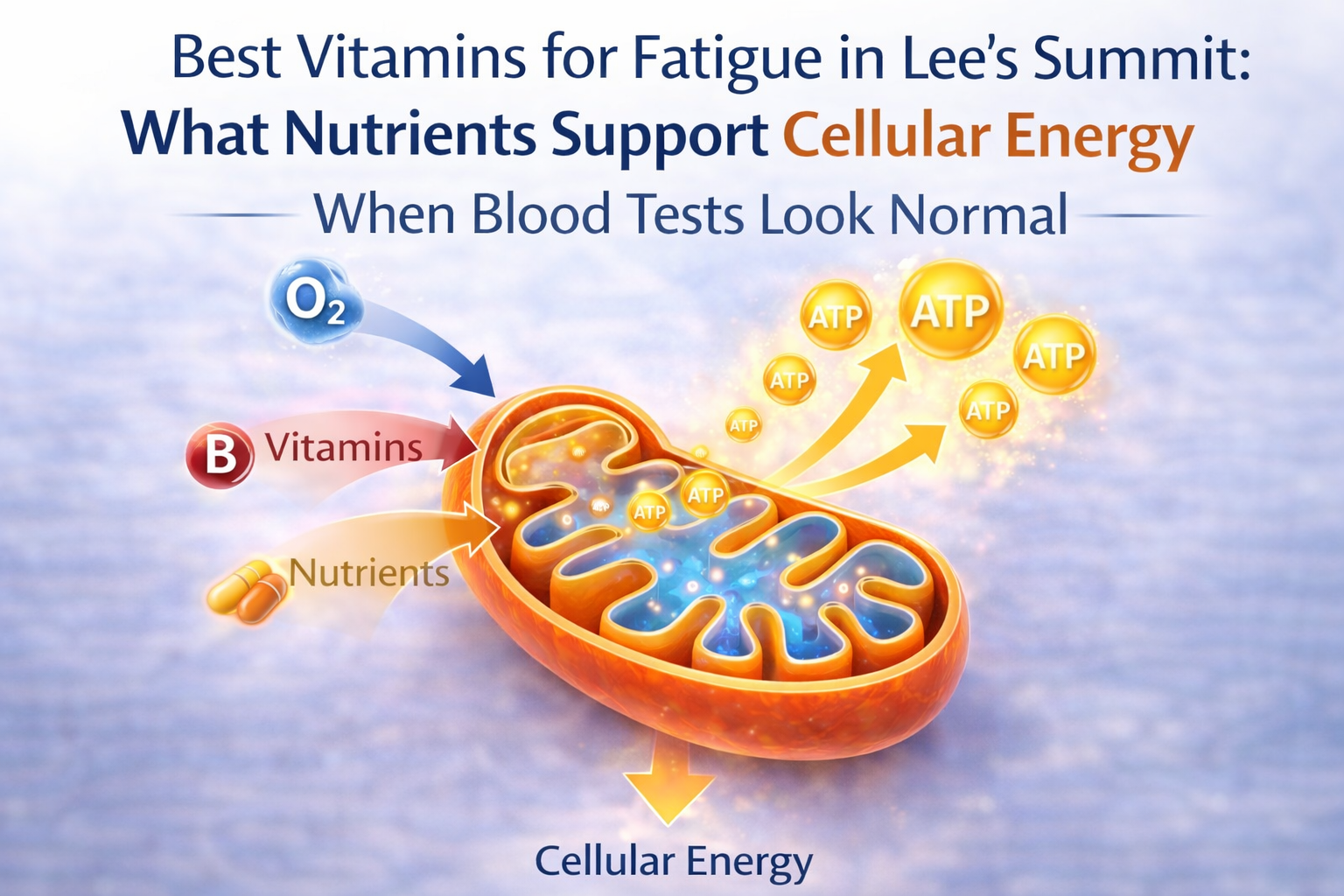
It depends on a network of nutrients that support oxygen delivery, mitochondrial function, ATP production, inflammation balance, and metabolic signaling.
Some of the most important include:
• B-vitamins
• magnesium
• iron and ferritin
• vitamin D
• omega-3 fatty acids
• CoQ10
Each one supports energy in a different way.
The table below summarizes several nutrients commonly associated with cellular energy production and fatigue patterns.
| Nutrient | Key Energy Role | Common Suboptimal Pattern | CelluShine Support |
|---|---|---|---|
| B-Vitamins | Krebs cycle activity, methylation, mitochondrial enzymes | Low-normal B12 or folate often associated with fatigue and brain fog | Complex B Blast |
| Magnesium | Activates Mg-ATP, supports enzyme reactions | Intracellular magnesium often low even when serum levels appear normal | Super Mag 8 |
| CoQ10 | Electron transport chain energy production | Levels may decline with age, stress, or metabolic strain | CoQ10 – Powerful Antioxidant |
| Vitamin D | Supports mitochondrial signaling and immune balance | Suboptimal levels are common during winter months | D3 5000+K2 |
| Iron / Ferritin | Oxygen delivery to mitochondria | Ferritin can be “normal” but still associated with fatigue | Absorb Iron |
| Omega-3 | Membrane health and inflammation balance | High omega-6 to omega-3 ratio may influence metabolic stress | Omega-3 1000 |
Want to Understand What Your Labs May Be Showing?
Many people feel fatigued even when routine lab results appear normal.
Sometimes the explanation involves patterns in nutrient markers, cellular energy indicators, and metabolic stress signals that are not obvious when looking at one lab value at a time.
If you want a deeper educational look at your blood work patterns, CelluShine offers a blood lab interpretation report focused on cellular energy and nutrient metabolism. This review focuses on nutrient markers, metabolic stress indicators, and patterns that may influence cellular energy production.
You can learn more or submit your labs here:
Blood Lab Interpretation in Lee’s Summit
B-vitamins and metabolic energy production
The B-vitamin family helps drive the machinery of metabolism.
These vitamins support pathways involved in:
• turning food into usable energy
• red blood cell formation
• methylation
• nervous system support
• mitochondrial enzyme activity
• neurotransmitter production
When B-vitamin status begins to slip, people may feel more mentally sluggish, less resilient, and more easily drained.
This is why B-vitamins are such an important part of the fatigue conversation. Across your existing blog network, these individual nutrients already connect strongly to low-energy patterns, including thiamine, riboflavin, niacin, pantothenic acid, folate, B6, and B12.
For people looking for broader B-vitamin support, CelluShine offers CelluShine Complex B Blast Ultimate Energy Vitality Formula, which is positioned around metabolic energy, mental clarity, and overall vitality.
For more on individual B-vitamin patterns, see Vitamin B12 Deficiency Symptoms in Lee’s Summit: Why You Feel Tired, Foggy, and Numb Even With Normal Labs, Folate (Vitamin B9) Deficiency in Lee’s Summit | Fatigue & Cellular Energy, Thiamine (Vitamin B1) Deficiency in Lee’s Summit, Riboflavin (Vitamin B2) Deficiency in Lee’s Summit, Niacin (Vitamin B3) Deficiency in Lee’s Summit, and Irritable, Moody, Foggy in Lee’s Summit? Vitamin B6 Deficiency
Magnesium and ATP activation
Magnesium is one of the most important minerals for energy production.
ATP, the body’s main energy molecule, has to bind with magnesium to function properly. Without enough magnesium, energy production may become less efficient even if a person is sleeping enough or eating fairly well.
Magnesium also supports:
• muscle relaxation
• nervous system balance
• enzyme activity
• stress resilience
• sleep quality
For people who need magnesium support, CelluShine offers Super Mag 8
Magnesium also connects strongly with hydration and electrolyte balance, which is why it pairs naturally with Hydration & Electrolytes and Magnesium Levels & Fatigue in Lee’s Summit: Optimal vs Normal Blood Test Ranges.
Iron, ferritin, and oxygen delivery
Iron is essential because it helps carry oxygen throughout the body.
If oxygen delivery is impaired, mitochondrial energy production can suffer. This is one reason low ferritin and low iron patterns are so often connected to fatigue, poor stamina, and slower recovery.
When ferritin is low, people may still be told their labs are normal, especially if hemoglobin has not dropped enough to trigger alarm.
That is why ferritin matters so much in your fatigue series.
For more, see Ferritin Levels in Lee’s Summit: Optimal vs Normal Iron Blood Test Ranges for Fatigue and Iron Deficiency Without Anemia in Lee’s Summit
Vitamin D and metabolic signaling
Vitamin D is often discussed for bone health, but it also influences immune signaling, inflammation patterns, and metabolic regulation.
When vitamin D status is low or suboptimal, people may experience fatigue, low mood, poor recovery, and brain fog even when other markers appear acceptable.
This makes vitamin D an important nutrient in the broader cellular energy conversation.
For more, see Vitamin D Levels in Lee’s Summit: Optimal vs Normal Blood Test Ranges for Fatigue.
Omega-3 fatty acids and inflammation balance
Omega-3 fats help support cell membrane health and inflammatory balance.
That matters because inflammation and membrane signaling affect how well cells respond to metabolic demands and how efficiently nutrients are used.
When omega-3 levels are low, some people notice more brain fog, slower recovery, or a general sense of feeling run down.
For people wanting omega-3 support, CelluShine offers Omega-3 1000
For more, see Omega-3 Deficiency in Lee’s Summit: Brain Fog, Fatigue & Cellular Energy
CoQ10 and mitochondrial ATP production
CoQ10 plays a direct role in the mitochondrial electron transport chain, the system cells use to produce ATP.
If that system becomes less efficient, people may experience lower endurance, lower physical energy, slower recovery, and more mental fatigue.
This is why CoQ10 fits naturally into a fatigue support strategy centered on mitochondrial function.
For people interested in mitochondrial support, CelluShine offers CoQ10 – Powerful Antioxidant & Heart Health Support.
Because CoQ10 functions inside the mitochondrial electron transport chain, deficiencies can reduce ATP production and contribute to fatigue. This relationship is explored further in the Mitochondrial Dysfunction pillar page and in the article CoQ10 Deficiency & Fatigue in Lee’s Summit which explains how mitochondrial nutrient levels influence ATP production and fatigue patterns.

These nutrients function together to support mitochondrial ATP production, which is the biochemical process responsible for producing usable cellular energy.
Support for Cellular Energy and Nutrient Availability
Many people dealing with fatigue are not lacking just one nutrient.
More often, energy production slows because multiple metabolic cofactors begin to drift lower at the same time.
Supporting mitochondrial energy production often involves a combination of nutrients that assist with:
• cellular ATP production
• oxygen delivery
• metabolic enzyme activity
• inflammation balance
• nervous system resilience
These nutrients support the biochemical pathways involved in mitochondrial ATP production, oxygen transport, and cellular metabolism.

CelluShine offers several supplements designed to support these metabolic pathways:
• Complex B Blast - full-spectrum B-vitamins that support metabolic energy production and neurological function

• Super Mag 8 - eight absorbable forms of magnesium that assist ATP activation, muscle relaxation, and nervous system balance

• Omega-3 1000 - essential fatty acids that support cell membrane health and inflammation balance

• CoQ10 - a mitochondrial nutrient that plays a direct role in cellular energy production

These nutrients support many of the metabolic pathways discussed throughout this article.
The bigger picture: fatigue is usually a pattern, not one nutrient
Most people with fatigue are not dealing with just one isolated issue.
More often, they are dealing with a pattern involving several nutrients, hydration status, inflammation, metabolic stress, thyroid signaling, or oxygen delivery.
That is why your broader content architecture matters.
The article The Vitamin & Mineral Deficiency Map: 12 Nutrients That Cause Fatigue in Lee’s Summit Even With Normal Labs gives a broader view of how these nutrients interact.
And if someone is trying to understand the overall symptom picture first, the best related hub is Why Am I Tired If My Blood Tests Are Normal? Cellular Energy, Optimal Lab Ranges & Hidden Metabolic Causes.
Educational blood lab interpretation in Lee’s Summit
If you live in Lee’s Summit, Blue Springs, Independence, Grain Valley, or the surrounding Kansas City area and still feel tired, foggy, or low on energy despite “normal” blood work, reviewing those markers through a broader metabolic lens may provide more insight.
CelluShine’s approach focuses on patterns involving:
• cellular energy production
• nutrient metabolism
• mitochondrial function
• fatigue physiology
You can learn more on Blood Lab Interpretation in Lee’s Summit
About Dr. Rich Prather
Dr. Rich Prather, DC, is a chiropractic physician with more than 22 years of clinical experience and over 10 years reviewing blood work patterns related to fatigue, nutrient metabolism, and cellular energy production.
Based in Lee’s Summit, Missouri, Dr. Prather studies how nutrient status, mitochondrial function, hydration, and metabolic physiology influence how the body produces cellular energy.
Through his work with CelluShine, Dr. Prather focuses on educational blood lab interpretation that helps individuals better understand the relationship between nutrient availability, metabolic stress, and symptoms that often appear long before traditional laboratory ranges indicate disease.
His work emphasizes:
• cellular energy production
• mitochondrial function
• nutrient metabolism
• hydration and electrolyte balance
• pattern recognition within blood work
Learn more about this approach at Blood Lab Interpretation in Lee’s Summit
Frequently Asked Questions
What vitamins help fatigue the most?
Short answer: The most important nutrients often include B-vitamins, magnesium, iron, vitamin D, omega-3 fatty acids, and CoQ10. These nutrients support oxygen delivery, mitochondrial function, and ATP production, which are all central to energy.
Why do I feel tired even when my blood tests are normal?
Short answer: Standard lab ranges are designed to detect disease, not optimal metabolic performance. A nutrient level can still be “normal” while being too low to fully support strong cellular energy production.
Which B vitamin is best for energy?
Short answer: There is not just one. B1, B2, B3, B5, B6, B9, and B12 all support different parts of metabolic energy production, which is why many people do better with a full B-complex rather than focusing on only one B-vitamin.
Can magnesium help with fatigue?
Short answer: Yes, it can. Magnesium is required for ATP activation and also supports muscle relaxation, nervous system balance, and metabolic enzyme activity.
Does low iron cause fatigue even without anemia?
Short answer: Yes. Low ferritin and low iron stores can reduce oxygen delivery and impair cellular energy production before full anemia develops.
Can vitamin D affect energy?
Short answer: Yes. Vitamin D influences immune signaling, metabolic regulation, and recovery patterns, which can affect how energized or depleted a person feels.
Can omega-3 help with brain fog?
Short answer: It may. Omega-3 fatty acids support cell membranes and inflammation balance, both of which influence cognitive clarity and metabolic signaling.
What is CoQ10 used for in fatigue support?
Short answer: CoQ10 supports the mitochondrial electron transport chain, which helps cells produce ATP more efficiently.
What lab markers are most important for fatigue?
Short answer: Ferritin, magnesium, vitamin D, B12, folate, thyroid markers, glucose regulation markers, and inflammation markers are often part of the fatigue picture.
Why does fatigue often start before lab values get flagged?
Short answer: Because metabolic inefficiencies can begin before a marker becomes abnormal. Cells can struggle to produce energy efficiently while standard blood ranges still look normal.
CelluShine Pillar Pages
Cellular Energy Framework
https://cellushine.net/pages/cellular-energy-framework
Metabolic Nutrient Framework
https://cellushine.net/pages/metabolic-nutrient-framework
Mitochondrial Dysfunction
https://cellushine.net/pages/mitochondrial-dysfunction
Optimal vs Standard Lab Ranges
https://cellushine.net/pages/optimal-vs-standard-lab-ranges
Hydration & Electrolytes
https://cellushine.net/pages/hydration-electrolytes
Blood Lab Interpretation in Lee’s Summit
https://cellushine.net/pages/blood-lab-interpretation-lee-s-summit