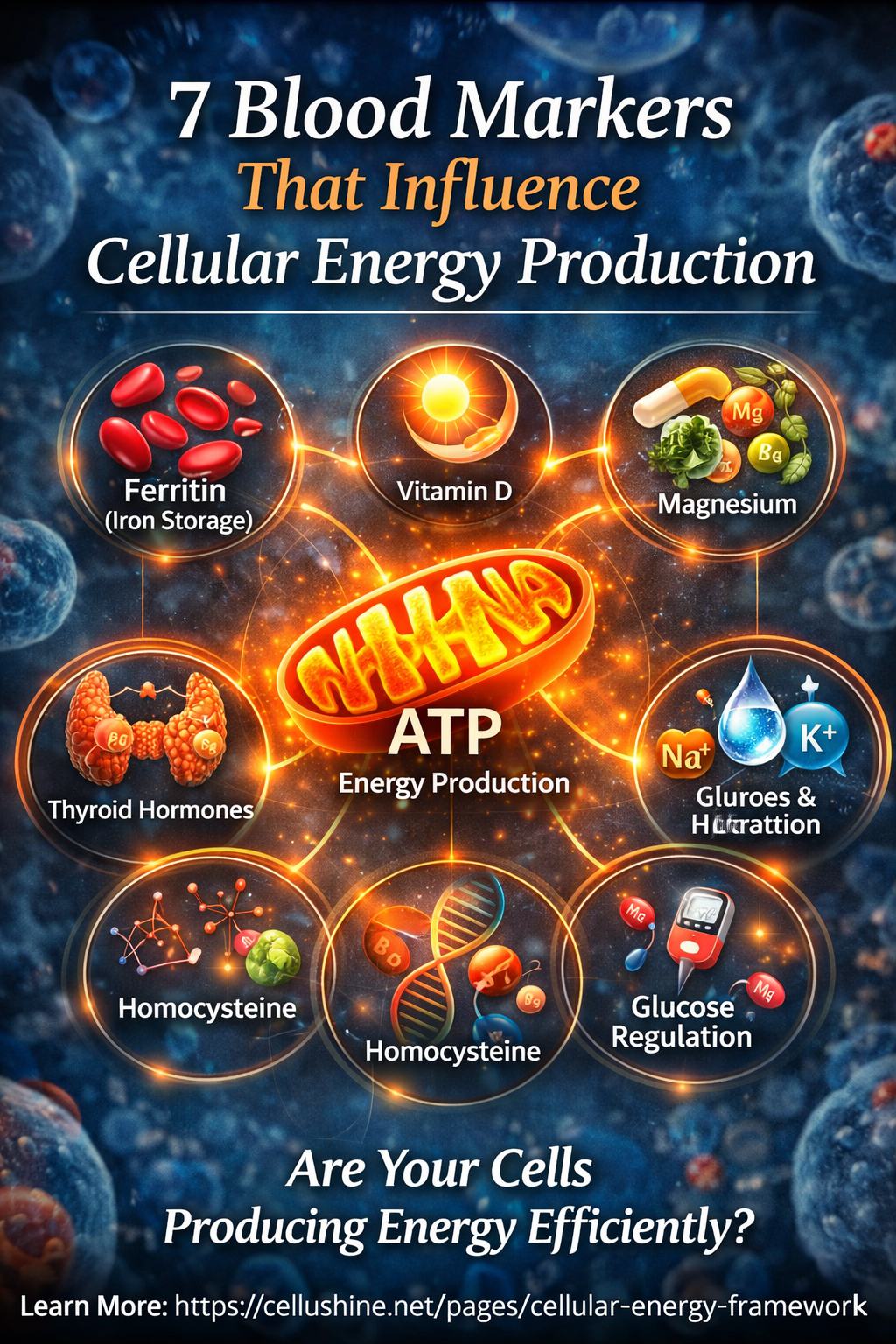
The Cellular Energy Framework: Why “Normal” Blood Tests Don’t Always Explain Fatigue
If you’ve ever been told your blood work is “normal” but you still feel exhausted, you’re not alone.
Many people live in a frustrating gap between what their laboratory results say and how their body actually feels.
You wake up tired.
Your energy crashes in the afternoon.
Your brain feels foggy.
Your motivation disappears.
You push through work, family responsibilities, and daily life — wondering why something that once felt easy now feels exhausting.
Eventually you get blood work done.
A few days later the results come back.
“Everything looks normal.”
But you know something isn’t right.
For many people, the issue isn’t disease. The issue is cellular energy production.
Understanding how the body produces energy at the cellular level is the foundation of what we call the Cellular Energy Framework.
You can explore the full framework here:
https://cellushine.net/pages/cellular-energy-framework
Energy in the Body Begins Inside Your Cells
Every cell in the body contains small structures called mitochondria.
Mitochondria act as the body’s energy generators, producing a molecule called ATP (adenosine triphosphate).
ATP powers nearly every biological process in the human body, including:
• brain function
• muscle contraction
• metabolic regulation
• cellular repair
• immune function
Your body produces trillions of ATP molecules every single day to sustain life.
When mitochondrial energy production becomes less efficient, the body begins to send signals.
Those signals often appear as:
• persistent fatigue
• brain fog
• low motivation
• poor concentration
• slow recovery
• feeling drained despite sleep
These symptoms can appear long before disease is detectable on standard laboratory testing.
Why Standard Lab Ranges Often Miss Energy Problems
Most laboratory reference ranges were designed to detect disease, not evaluate metabolic performance.
Reference ranges are typically built from statistical averages within large populations.
If your number falls inside that range, it is labeled normal.
But normal does not always mean optimal for cellular function.
This creates what the Cellular Energy Framework describes as a metabolic gray zone.
Inside this gray zone:
• lab markers may still be considered normal
• metabolic efficiency may be declining
• symptoms may begin to appear
Many people experiencing fatigue are living inside this metabolic gray zone.
Their lab reports appear normal.
But their cellular energy systems may already be under stress.
Cellular Energy Depends on Multiple Systems Working Together
Energy production is not controlled by a single nutrient or hormone.
Instead, it depends on several interconnected biological systems.
These include:
Oxygen Delivery
Iron-dependent proteins carry oxygen through the bloodstream so mitochondria can generate ATP efficiently.
Nutrient Cofactors
B vitamins, magnesium, and other micronutrients act as cofactors for enzymes involved in metabolic energy pathways.
Hormonal Regulation
Hormones such as thyroid hormones influence metabolic speed and mitochondrial activity.
Hydration and Electrolyte Balance
Mineral balance and cellular hydration affect circulation, nerve signaling, and the electrical gradients that support energy metabolism.
You can learn more about hydration and electrolytes here:
https://cellushine.net/pages/hydration-electrolytes
Why Fatigue Rarely Comes From One Lab Marker
One of the central ideas behind the Cellular Energy Framework is that fatigue rarely comes from a single abnormal lab value.
Instead, fatigue usually reflects patterns across multiple biomarkers.
For example, someone may have:
• ferritin toward the lower end of normal
• vitamin D slightly low
• magnesium borderline
• homocysteine mildly elevated
Individually, none of these markers may appear concerning.
But together they may influence how efficiently mitochondria produce ATP.
This pattern-based approach to lab interpretation is the foundation of the Cellular Energy Framework.
You can learn more about this model here:
https://cellushine.net/pages/cellular-energy-framework
A Different Way to Think About Fatigue
Traditional medical evaluations typically ask one question:
Is there a disease present?
The Cellular Energy Framework asks a different question:
Are the biological systems responsible for producing energy functioning efficiently?
When viewed through this lens, fatigue becomes easier to understand.
The body is not simply tired.
It is sending signals that the systems responsible for producing cellular energy may need attention.
Understanding Your Blood Work Through the Cellular Energy Framework
Many of the markers already included in routine blood panels can provide insight into cellular energy systems.
These may include markers related to:
• iron metabolism
• vitamin D levels
• thyroid hormones
• methylation pathways
• mineral balance
• metabolic regulation
When these markers are evaluated together instead of individually, they can reveal patterns affecting mitochondrial energy production.
This broader interpretation is the goal of the Cellular Energy Framework.
Learn more here:
https://cellushine.net/pages/cellular-energy-framework
Frequently Asked Questions
Why do I feel exhausted even though my blood tests are normal?
Laboratory reference ranges are designed to detect disease. Fatigue can occur when metabolic systems become inefficient even while lab values remain inside statistical ranges.
What produces energy in the body?
Energy is produced primarily inside mitochondria, which convert nutrients and oxygen into ATP — the molecule that powers cellular activity.
Can nutrient deficiencies affect mitochondrial energy?
Yes. Nutrients such as iron, magnesium, and B vitamins act as cofactors in metabolic pathways required for ATP production.
What is mitochondrial dysfunction?
Mitochondrial dysfunction refers to reduced efficiency in the systems responsible for producing ATP, which may contribute to symptoms such as fatigue, brain fog, and reduced stamina.
Why do multiple lab markers matter instead of one?
Energy metabolism depends on coordinated biological systems. Patterns across multiple biomarkers often provide more insight than evaluating a single marker alone.
What is cellular energy metabolism?
Cellular energy metabolism refers to the biochemical processes that convert nutrients and oxygen into ATP within mitochondria.
Research and Scientific References
Wallace DC. Mitochondria and the biology of energy. Science. 2005.
Camaschella C. Iron-deficiency anemia. New England Journal of Medicine. 2015.
Holick MF. Vitamin D deficiency. New England Journal of Medicine. 2007.
de Baaij JHF et al. Magnesium in man: implications for health and disease. Physiological Reviews. 2015.
Nunnari J, Suomalainen A. Mitochondria: in sickness and in health. Cell. 2012.
Nicholson JK et al. Metabolic profiling and systems biology in human metabolism. Nature Reviews Molecular Cell Biology.