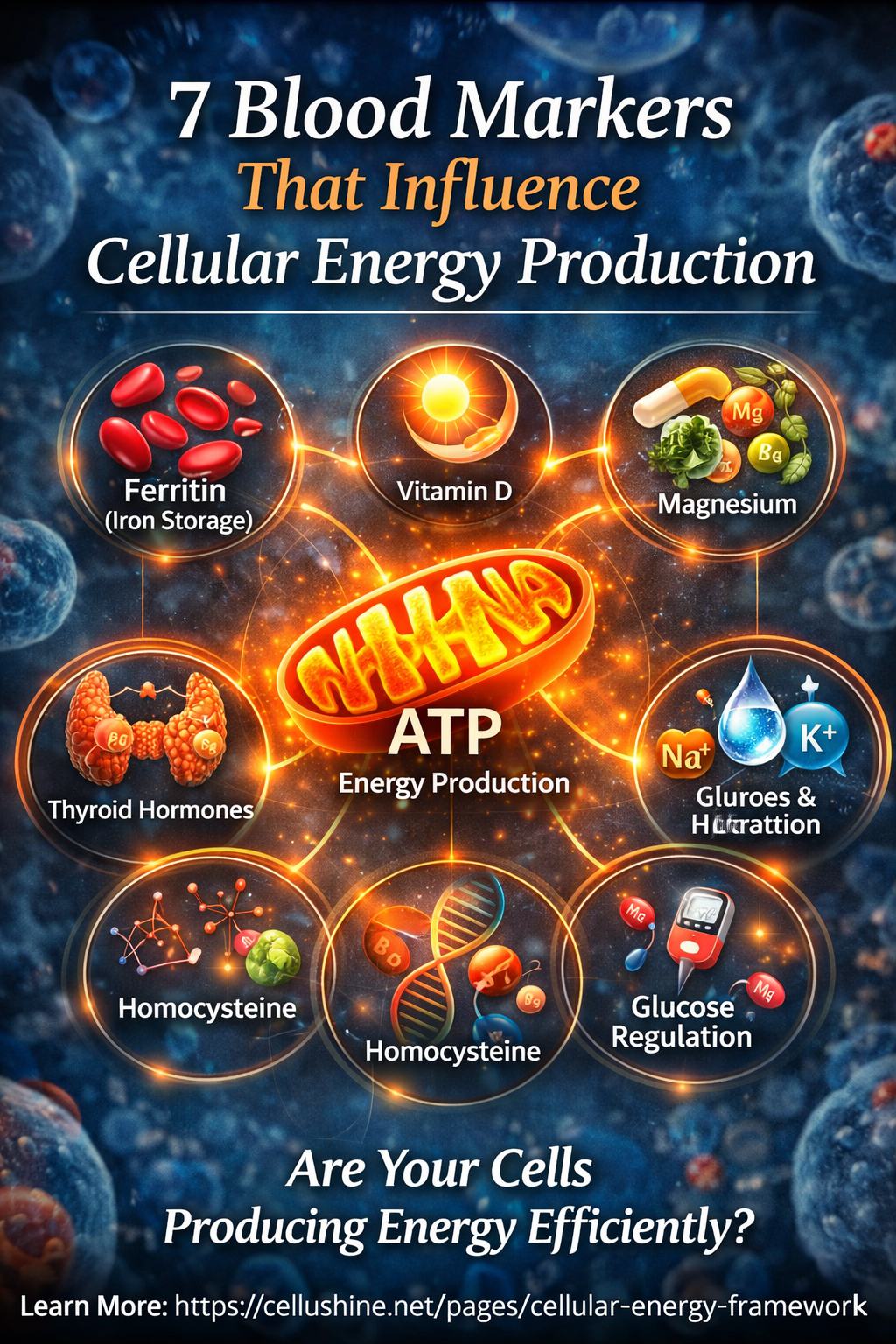
7 Blood Markers That Influence Cellular Energy Production
Many people experience persistent fatigue even though their blood tests are labeled “normal.”
They sleep enough.
They try to eat better.
They attempt to exercise.
Yet their energy never fully returns.
One of the most overlooked reasons for this disconnect is that cellular energy production depends on multiple biological systems working together, not just one lab marker.
Energy in the body is produced inside mitochondria — the microscopic power plants inside every cell. These structures convert oxygen and nutrients into ATP, the molecule that powers nearly every biological process.
When the systems supporting mitochondrial energy production begin to lose efficiency, symptoms like fatigue and brain fog may appear long before disease is detectable on routine lab testing.
This concept is central to the Cellular Energy Framework, which explains how multiple metabolic pathways influence energy production.
You can learn more about the full framework here:
https://cellushine.net/pages/cellular-energy-framework
Below are seven blood markers that often provide insight into how efficiently your body is producing cellular energy.
1. Ferritin (Iron Storage)
Ferritin reflects the body’s stored iron levels.
Iron plays a critical role in oxygen transport because it is a core component of hemoglobin — the protein that carries oxygen through the bloodstream.
Mitochondria require oxygen to produce ATP efficiently. If oxygen delivery declines, cellular energy production may decrease.
Low or borderline ferritin levels are frequently associated with symptoms such as:
• fatigue
• reduced stamina
• shortness of breath during exertion
• decreased exercise tolerance
Iron is also involved in mitochondrial enzymes responsible for energy metabolism.
When iron availability is limited, the body may struggle to maintain optimal ATP production.
2. Vitamin D
Vitamin D is often discussed in relation to bone health, but it also plays a role in mitochondrial function and metabolic regulation.
Vitamin D receptors exist in many tissues throughout the body, including muscle and immune cells.
Research suggests vitamin D influences:
• mitochondrial respiration
• muscle energy metabolism
• immune system regulation
Low vitamin D levels are frequently associated with fatigue, reduced physical performance, and decreased recovery after exertion.
3. Magnesium
Magnesium is one of the most important minerals involved in cellular energy production.
ATP — the body’s primary energy molecule — is actually stored and used as Mg-ATP, meaning magnesium is required for ATP to function properly.
Magnesium supports:
• mitochondrial enzyme activity
• ATP stability
• muscle and nerve signaling
• glucose metabolism
Even mild magnesium insufficiency may contribute to symptoms such as fatigue, muscle tightness, and brain fog.
4. Thyroid Hormones (Free T3 and Free T4)
Thyroid hormones regulate metabolic speed throughout the body.
They influence how quickly cells convert nutrients into energy.
Free T3 is the active thyroid hormone that binds directly to cellular receptors and influences mitochondrial activity.
When thyroid signaling is suboptimal, cellular energy production may slow down.
Symptoms commonly associated with reduced thyroid activity include:
• fatigue
• cold intolerance
• slowed metabolism
• decreased mental clarity
Even when TSH levels appear normal, variations in Free T3 may influence metabolic efficiency.
5. Homocysteine
Homocysteine is a metabolic byproduct associated with the body’s methylation pathways.
Methylation processes influence several biological systems involved in energy production, including:
• neurotransmitter balance
• detoxification pathways
• DNA repair
• mitochondrial function
Elevated homocysteine levels may suggest that methylation pathways are under stress, which may indirectly affect metabolic efficiency.
These pathways depend on nutrients such as:
• vitamin B12
• folate
• vitamin B6
6. Glucose Regulation Markers
Blood glucose and insulin regulation play a major role in cellular energy metabolism.
Cells require glucose as one of their primary fuel sources.
However, when glucose regulation becomes inefficient, energy production may fluctuate.
Common symptoms associated with unstable glucose regulation include:
• energy crashes
• brain fog
• sugar cravings
• difficulty maintaining focus
Markers such as fasting glucose, hemoglobin A1C, and insulin can provide insight into how efficiently the body is utilizing glucose for energy production.
7. Electrolytes and Hydration Markers
Proper hydration and electrolyte balance influence circulation, nerve signaling, and cellular electrical gradients.
Electrolytes such as sodium, potassium, and chloride play a role in:
• nerve transmission
• muscle contraction
• fluid balance
• cellular transport systems
Hydration status may also influence blood volume and oxygen delivery.
You can learn more about hydration and electrolyte balance here:
https://cellushine.net/pages/hydration-electrolytes
Why Patterns Matter More Than Individual Markers
One of the central ideas behind the Cellular Energy Framework is that fatigue rarely comes from a single abnormal lab marker.
Instead, fatigue often reflects patterns across multiple metabolic systems.
For example, someone might have:
• ferritin toward the lower end of normal
• magnesium borderline
• vitamin D slightly low
• homocysteine mildly elevated
Each individual marker may still fall within its reference range.
But together, these patterns may influence how efficiently mitochondria produce ATP.
Looking at lab markers collectively rather than individually provides a more complete picture of metabolic function.
You can explore the full Cellular Energy Framework here:
https://cellushine.net/pages/cellular-energy-framework
Frequently Asked Questions
Why do I feel tired if my blood tests are normal?
Most laboratory ranges are designed to detect disease. Fatigue can appear when metabolic systems begin to lose efficiency even while lab values remain within reference ranges.
What produces energy inside the body?
Energy is produced primarily in mitochondria, where nutrients and oxygen are converted into ATP — the molecule that powers cellular activity.
Can nutrient deficiencies affect cellular energy?
Yes. Nutrients such as iron, magnesium, B vitamins, and vitamin D act as cofactors in metabolic pathways required for ATP production.
Why do multiple lab markers matter for fatigue?
Energy metabolism depends on several biological systems working together. Patterns across multiple biomarkers often reveal more insight than a single marker alone.
Scientific References
Wallace DC. Mitochondria and the biology of energy. Science.
Camaschella C. Iron-deficiency anemia. New England Journal of Medicine.
Holick MF. Vitamin D deficiency. New England Journal of Medicine.
de Baaij JHF et al. Magnesium in man: implications for health and disease. Physiological Reviews.
Nunnari J, Suomalainen A. Mitochondria: in sickness and in health. Cell.