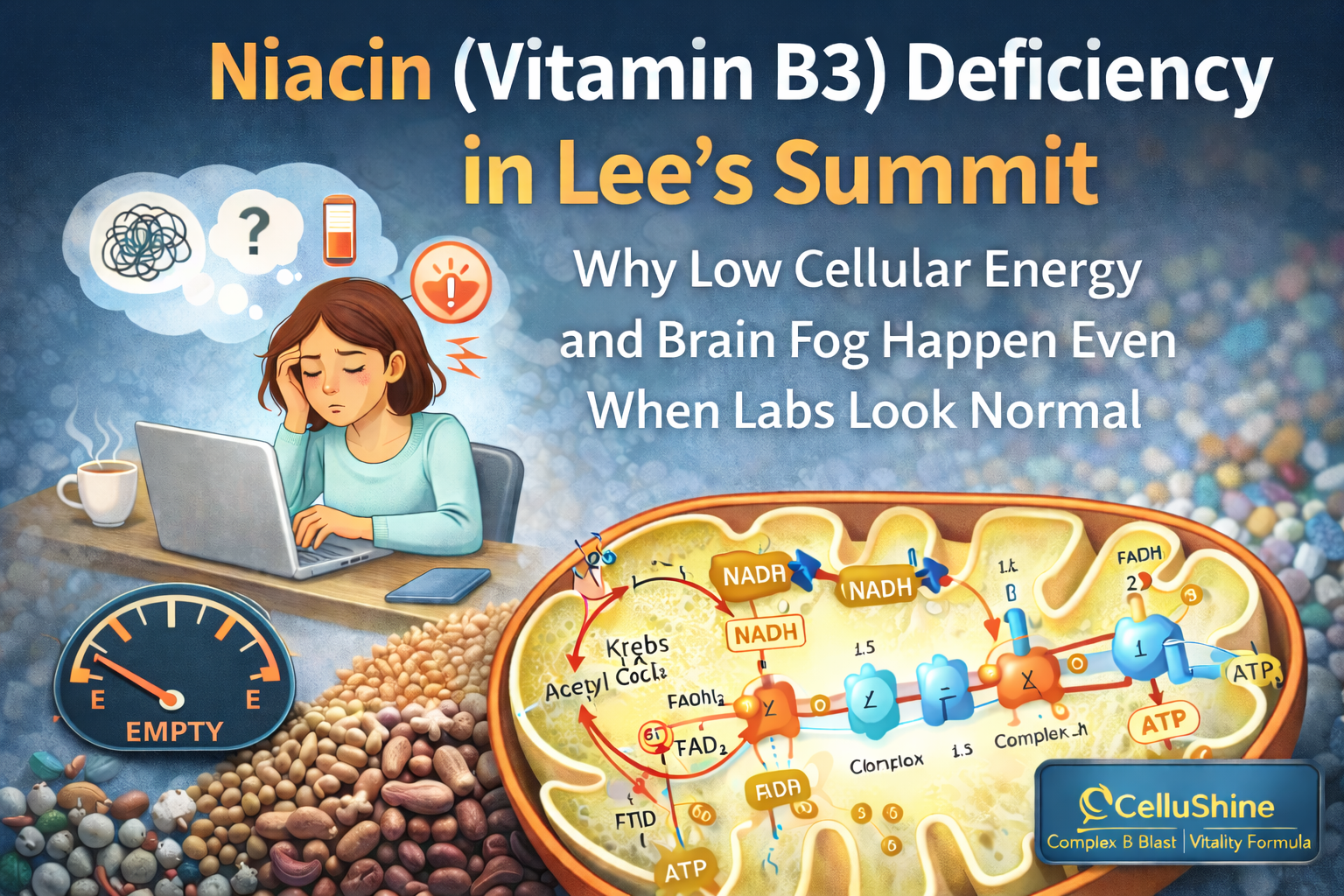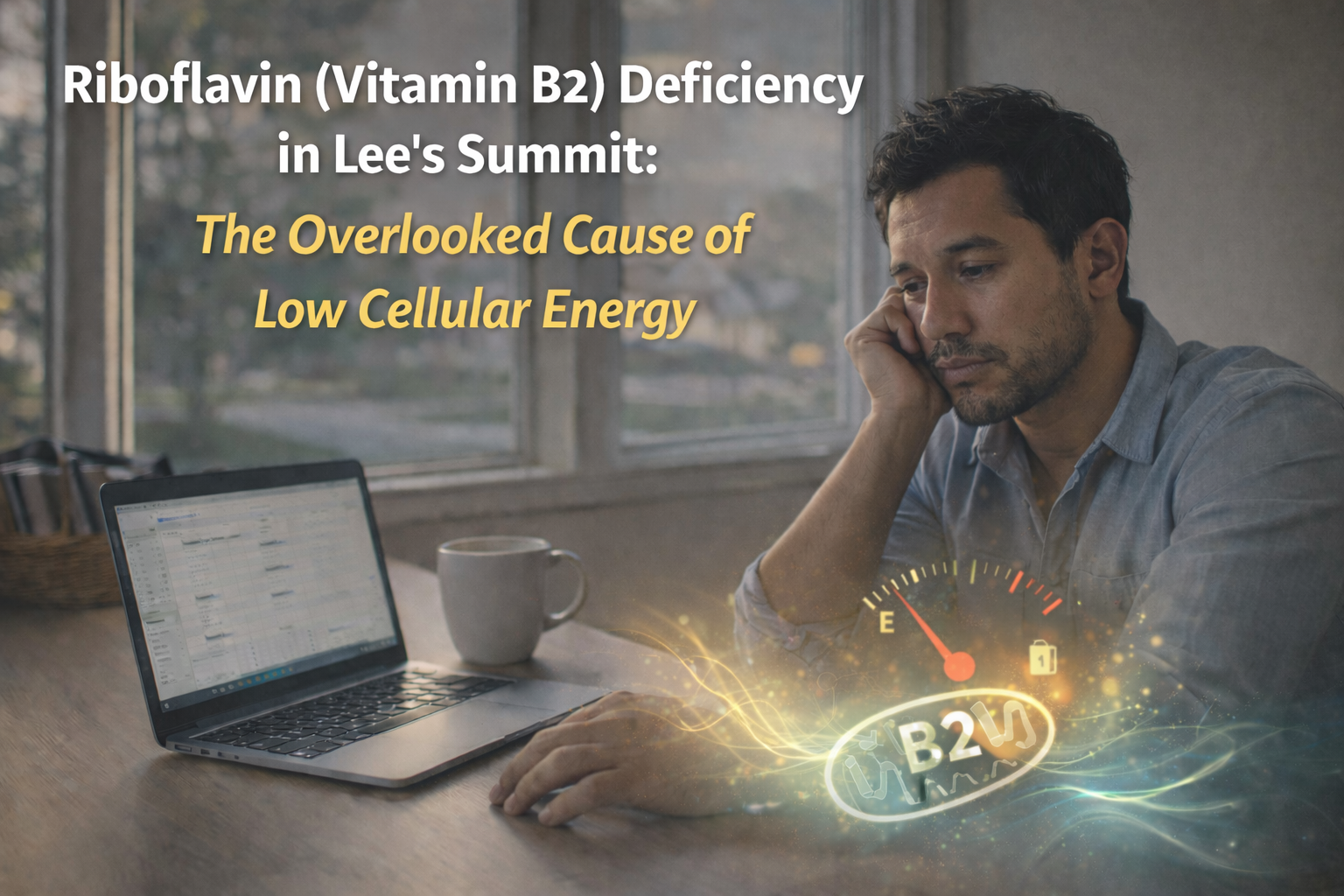
Riboflavin (Vitamin B2) Deficiency in Lee’s Summit: The Overlooked Cause of Low Cellular Energy
Many people across Lee’s Summit, Blue Springs, and the Kansas City metro push through their days feeling like their battery is permanently stuck at 20%.
You might get decent sleep, eat what seems like balanced meals, even hit the gym or walk the trails at Longview Lake—but the deep, cellular-level energy just isn’t there. Coffee helps for an hour, then the crash returns.
Your doctor runs standard bloodwork during your annual physical and says, “Everything looks normal.”
But what if “normal” isn’t the same as optimal—and your mitochondria are quietly struggling?
One frequently overlooked root cause of persistent low cellular energy is riboflavin (vitamin B2) deficiency.
Riboflavin is a critical coenzyme in the Krebs cycle and electron transport chain, essentially helping your cells convert food into ATP (cellular energy). When B2 is low, mitochondrial energy production slows, leaving you feeling flat, foggy, and unmotivated even when labs appear fine.

If you’re new to how nutrients power cellular energy, explore the Cellular Energy Framework for a clear overview of mitochondrial ATP generation.
Quick Answer: Can Riboflavin Deficiency Cause Low Energy?
Yes.
Riboflavin (vitamin B2) is essential for the formation of the coenzymes FAD (Flavin Adenine Dinucleotide) and FMN (Flavin Mononucleotide). These molecules shuttle electrons through the mitochondrial energy system.
When B2 is insufficient:
-
the Krebs cycle slows
-
the electron transport chain becomes less efficient
-
ATP production declines
This can produce symptoms such as:
-
Chronic low energy or feeling “wired but tired”
-
Brain fog and poor mental stamina
-
Mouth sores or cracked lips
-
Sensitivity to light or eye fatigue
-
Muscle weakness or cramps during activity
These symptoms often occur even when routine blood tests appear normal, because serum riboflavin levels may not reflect how well mitochondria are functioning.
For more on why conventional labs can miss nutrient shortfalls, read our guide on Optimal vs Standard Lab Ranges.
What Riboflavin (Vitamin B2) Does for Energy
Riboflavin is a cornerstone of mitochondrial metabolism.
It helps produce the coenzymes FAD and FMN, which power many enzymes involved in cellular energy production.
These coenzymes are required for:
-
Oxidizing fats, carbohydrates, and proteins in the Krebs cycle
-
Passing electrons through Complex I and Complex II of the electron transport chain
-
Supporting enzymes like succinate dehydrogenase
-
Assisting fatty-acid metabolism through acyl-CoA dehydrogenase
Without adequate B2:
-
energy production bottlenecks form
-
mitochondria generate less ATP
-
high-energy tissues such as the brain, muscles, and heart are affected first
This is why riboflavin deficiency often feels like “low cellular voltage”—you’re functioning, but nothing feels fully powered.
Learn how B vitamins and other nutrients interconnect in these pathways in the Metabolic Nutrient Framework.
Common Symptoms of Riboflavin Deficiency
Low riboflavin affects energy metabolism, skin health, and vision.
Common symptoms include:
-
Persistent low energy despite rest
-
Brain fog or difficulty sustaining focus
-
Cracked corners of the mouth (angular cheilitis)
-
Sore, red, or swollen tongue (glossitis)
-
Dry, scaly lips or skin
-
Eye irritation or sensitivity to light
-
Muscle weakness or cramps
-
Fatigue related to mild anemia

Many people experiencing these symptoms also investigate related nutrient issues such as:
These nutrients all interact within the mitochondrial energy cycle.
Why Riboflavin Deficiency Can Be Overlooked
Routine blood panels ordered during annual physicals rarely test riboflavin directly.
Even when riboflavin is measured, serum levels can fall within the standard reference range while cellular and mitochondrial function remains suboptimal.

This is where pattern-based analysis becomes valuable.
At CelluShine, we evaluate bloodwork through a nutritional deficiency framework that identifies patterns associated with low cellular energy and mitochondrial stress.
Learn more about this approach on the Blood Lab Interpretation in Lee’s Summit page.
Why Riboflavin Deficiency May Be Common in Lee’s Summit
Lifestyle patterns common throughout the Kansas City metro area may increase riboflavin demand or reduce absorption.
These include:
-
Diets high in processed foods
-
High stress from work and commuting
-
Certain medications (oral contraceptives, antidepressants, antibiotics)
-
High caffeine intake masking fatigue
-
Alcohol consumption
-
Digestive issues affecting nutrient absorption
If dehydration or electrolyte imbalance compounds the issue, see our guide on Hydration & Electrolytes.
Foods That Contain Riboflavin
Natural dietary sources of vitamin B2 include:
-
Liver and organ meats
-
Dairy products (milk, yogurt, cheese)
-
Eggs
-
Lean meats such as chicken or beef
-
Green leafy vegetables like spinach
-
Almonds and mushrooms

Local farmers markets around Lee’s Summit and Jackson County are great places to find fresh eggs, dairy, and leafy greens naturally rich in B vitamins.

Frequently Asked Questions
Can my regular doctor’s bloodwork detect riboflavin deficiency?
Most standard blood panels do not test B2. Even when measured, serum levels can appear normal while mitochondrial energy production remains impaired.
Can riboflavin deficiency cause brain fog and fatigue?
Yes. Riboflavin is vital for mitochondrial ATP production in high-energy tissues like the brain, so shortages often manifest as mental fatigue and poor focus.
What depletes riboflavin in everyday life?
Refined diets, stress, alcohol, caffeine, certain medications, and digestive absorption issues can all increase B2 requirements.
How long until I feel better?
Many people notice steadier energy and clearer thinking within 2–6 weeks of restoring optimal levels.
Continue Reading
If you’re exploring fatigue causes, these guides may also help:
References
NIH Office of Dietary Supplements – Riboflavin Fact Sheet
Peer-reviewed studies on riboflavin, FAD/FMN, and mitochondrial metabolism
Optimal DX documentation on nutrient pattern analysis
Reclaim Your Energy in Lee’s Summit
Riboflavin may be the missing link when your body feels like it’s running on empty despite “normal” lab results.
If you want clarity on whether B2 or other nutrient gaps may be affecting your energy, you can upload your recent bloodwork for a personalized interpretation.
For direct nutritional support, CelluShine Complex B Blast – Ultimate Energy & Vitality Formula provides active riboflavin (R-5-phosphate) alongside the full B-vitamin spectrum and mitochondrial cofactors designed to support healthy cellular energy production.
Many people across the Kansas City area report steadier, more resilient energy when addressing these B-vitamin gaps.
Shop CelluShine Complex B Blast here