Low Iron Symptoms in Lee’s Summit: Why You Feel Exhausted Even With Normal Blood Tests
Many residents in Lee’s Summit, Blue Springs, Independence, Raytown, Grain Valley, Greenwood, and other Kansas City metro communities describe the same frustrating experience: a deep, lingering fatigue that doesn’t lift even after a good night’s sleep, healthy eating, or regular exercise. They push through the day feeling foggy, unmotivated, and drained — only to hear the same response from routine blood work:
“Your labs look normal.”
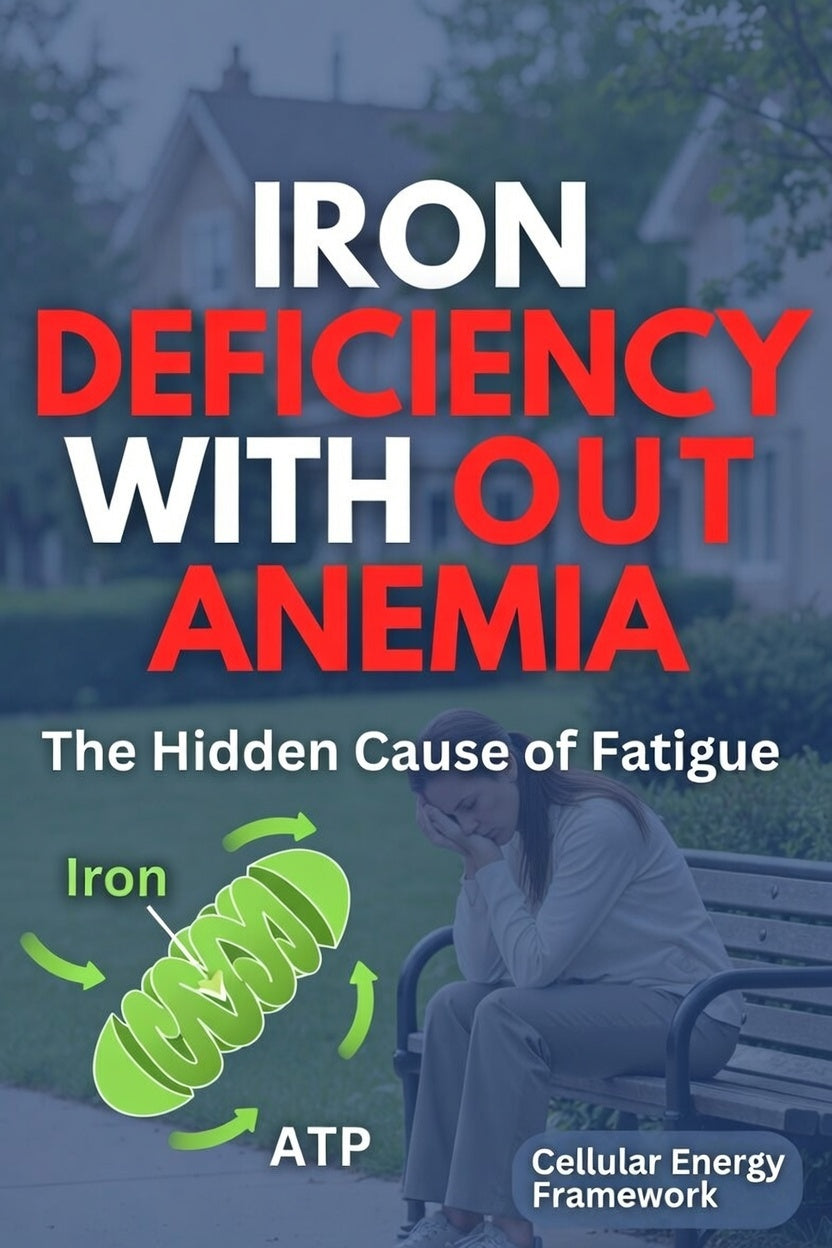
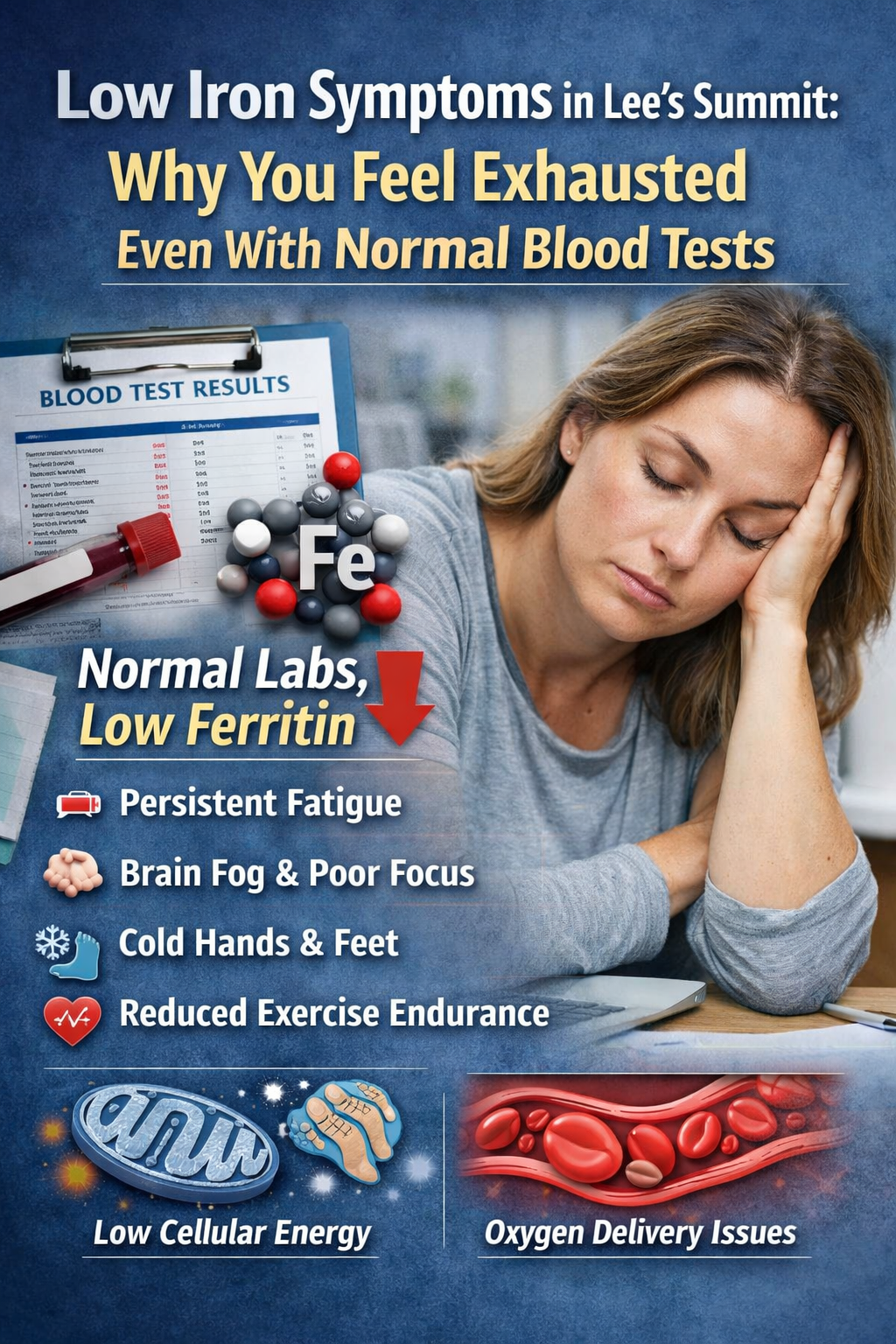
Yet the exhaustion persists. One common but often overlooked explanation is subtle low iron patterns, particularly low ferritin levels that affect oxygen delivery, mitochondrial function, and cellular energy long before anemia shows up on standard tests.
This educational post explores why low iron can cause fatigue despite “normal” results, what symptoms to watch for, and how these patterns fit into broader metabolic frameworks.
Why Iron Is Essential for Energy
Iron supports two critical systems that determine how energized you feel:
- Oxygen Transport — Iron is the core of hemoglobin, carrying oxygen from lungs to tissues. Without enough, cells can’t get the oxygen needed for metabolism.
- Mitochondrial ATP Production — Iron is required for enzymes in the electron transport chain — the pathway that generates ATP, the body’s main energy molecule.
When iron stores drop, both processes slow, reducing cellular energy output. This is a key concept in the Cellular Energy Framework, which shows how fatigue can arise from metabolic inefficiencies even when disease markers appear normal.
Common Low Iron Symptoms in the Lee’s Summit Area
Low iron often develops gradually, and the body compensates for a while, making symptoms feel subtle at first. Many people in Lee’s Summit and nearby communities report:
- Persistent fatigue that rest doesn’t fix
- Brain fog, trouble focusing, or mental sluggishness
- Reduced endurance during exercise or daily tasks
- Cold hands and feet
- Slower recovery from workouts or stress
- Low motivation or mood dips
These overlap with everyday complaints in busy areas like Independence, Raytown, Blue Springs, and Grain Valley, where stress, schedules, and lifestyle factors can make subtle deficiencies more noticeable.
If some of these sound familiar and you’re wondering how they might relate to your labs, feel free to reach out — we’re local to the Kansas City area and happy to answer questions or share resources.
Ferritin: The Overlooked Marker for Low Iron
Ferritin measures the body’s stored iron. Someone can have:
- Normal hemoglobin (no anemia diagnosis)
- Normal serum iron
- But low ferritin (often below 50 ng/mL, sometimes 20–40 ng/mL)
In this state — sometimes called iron deficiency without anemia — the body prioritizes iron for survival basics, leaving less for energy production, cognitive function, and recovery. Functional approaches often target ferritin 50–100+ ng/mL (or higher) for optimal energy and symptom relief.
Why “Normal” Labs Can Still Mean Low Energy
Standard reference ranges detect disease, not optimal function. Ferritin can land in the “normal” zone while still being too low for efficient ATP production and daily vitality. This “gray zone” explains why so many in Lee’s Summit feel exhausted despite “perfect” results.
Explore this further in Optimal vs Standard Lab Ranges Explained and Blood Test Markers That Affect Energy, Fatigue, and Brain Fog.
Nutrient Interactions That Matter
Iron doesn’t work alone. Related nutrients include:
- Copper — supports iron transport
- Magnesium — activates ATP and aids mitochondria (see Magnesium and ATP: Why It Matters for Energy, Fatigue, and Mitochondrial Health)
These ties are part of the Metabolic Nutrient Framework and Nutrient Strategy Framework.
Hydration’s Role in Amplifying Fatigue
Poor hydration or electrolyte imbalance reduces blood volume and impairs oxygen/nutrient delivery, worsening low-iron effects. See more in Hydration & Electrolytes: The Missing Link in Fatigue, Lab Results, and Cellular Energy.
Fatigue Patterns in Lee’s Summit and Beyond
Fatigue is one of the top health concerns in Lee’s Summit, Independence, Raytown, Blue Springs, and surrounding suburbs. Many hear “your labs are normal” yet still feel drained — subtle iron patterns often provide clues when viewed through a metabolic lens.
For local insights, see Blood Lab Interpretation in Lee’s Summit.
A Systems Approach to Understanding Fatigue
Energy isn’t about one marker — it’s the interplay of:
- Nutrient availability
- Hydration and circulation
- Inflammation
- Mitochondrial health
CelluShine’s educational focus helps people better understand these patterns in blood work — without diagnosing or treating disease.
If this resonates and you’d like to talk about what you’re seeing in your labs or symptoms, you’re welcome to drop us a message — we’re right here in the KC metro and glad to help clarify.
Explore the full model at CelluShine.net or read about our perspective on Functional Medicine in Lee’s Summit.
Curious About Your Own Patterns?
If low iron or these symptoms feel familiar, uploading recent labs is a simple step to get an educational review highlighting potential insights (starting at $97).
Upload Your Labs for an Educational Review → Start Here
Continue Reading
Explore related articles from our blog:
- Iron, Ferritin, and Fatigue: How Low Iron Can Affect Cellular Energy
- Low Ferritin Fatigue Symptoms in Kansas City
- Iron Deficiency Without Anemia in Lee’s Summit
References
- Camaschella C. Iron deficiency. New England Journal of Medicine.
- Beard JL. Iron biology in immune function and metabolism. Journal of Nutrition.
- Haas JD, Brownlie T. Iron deficiency and reduced work capacity. American Journal of Clinical Nutrition.
- Ganz T, Nemeth E. Iron homeostasis in health and disease. Nature Reviews Immunology.