
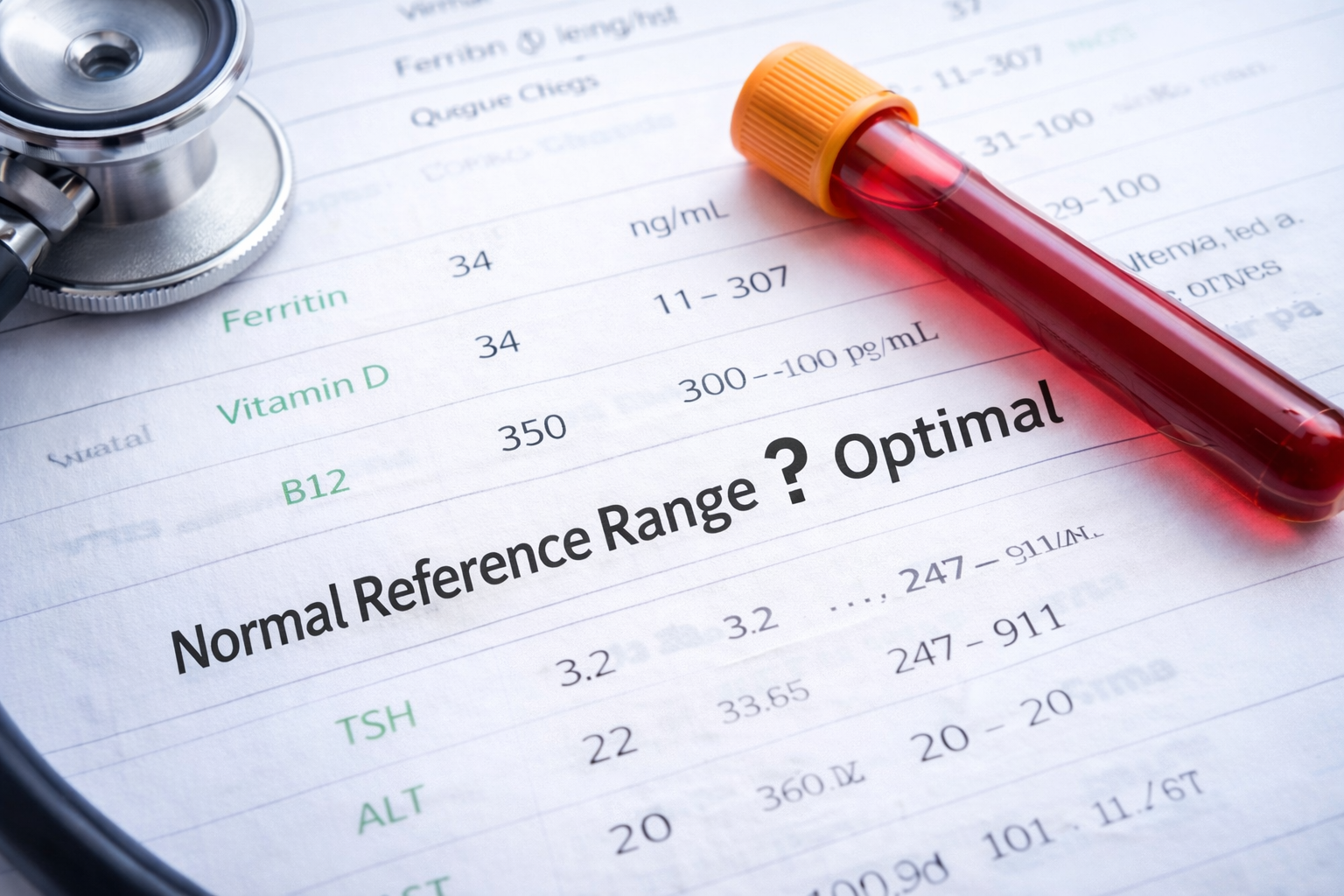
Why “Normal” Lab Ranges Don’t Always Mean Optimal | Blood Work Explained
Many people are told their blood work is “within normal range,” yet they continue to experience fatigue, brain fog, low energy, or poor recovery.
If you’ve ever looked at your lab results and thought, “Everything is normal… so why don’t I feel normal?” — you are not alone.
Understanding the difference between normal reference ranges and optimal interpretation can completely change how you view your standard blood tests.
If you’re ready for a structured educational review of your own labs, you can learn more here:
👉 Professional Blood Lab Analysis Through CelluShine
What Does “Normal Range” Actually Mean?
Standard laboratory reference ranges are based on large population averages.
They are designed to detect disease — not to define ideal health.
In other words:
• “Normal” often means statistically common
• It does not always mean biologically optimal
• It does not always reflect ideal nutrient utilization
For example, a lab value may technically fall inside the accepted range but sit at the very low or high end of that spectrum. In some individuals, this may correlate with symptoms — even though the lab is marked “normal.”
That’s where educational context matters.
Why You Can Feel Unwell With “Normal” Labs
There are several reasons someone may experience symptoms despite normal lab ranges:
1️⃣ Wide Reference Ranges
Lab ranges are often broad. A value near one extreme of the range may function very differently than one near the middle.
2️⃣ Nutrient Utilization vs Intake
Blood levels may reflect circulating nutrients — but they don’t always show how effectively nutrients are being used at the cellular level.
3️⃣ Hydration & Mineral Balance
Electrolyte patterns and hydration status can influence how lab values appear on standard panels.
4️⃣ Patterns vs Single Markers
Looking at one number alone rarely tells the full story. Trends across multiple markers often provide deeper insight.
This is why structured pattern review can provide clarity beyond surface interpretation.
Common Blood Tests Where Optimal Interpretation Matters
Many individuals seek deeper educational understanding of:
• Complete Blood Count (CBC)
• Comprehensive Metabolic Panel (CMP)
• Lipid Panels
• Iron Studies (Ferritin, Iron, TIBC)
• Thyroid Markers
• Vitamin B12 & Folate
• Vitamin D
• Inflammatory markers
If you want to see how these are analyzed from a nutrient and utilization-based perspective, you can review the process here:
👉 How the Educational Lab Review Works
Normal vs Optimal: An Educational Perspective
An educational blood lab review does not diagnose disease or replace medical care.
Instead, it provides structured explanation and context around:
• Nutrient-related patterns
• Mineral relationships
• Hydration trends
• Inflammatory signals
• Metabolic efficiency indicators
The goal is clarity — helping you better understand what your lab numbers may reflect before speaking with your healthcare provider.
If you are located in Missouri, you can also start with the local service overview here:
👉 Educational Blood Work Review in Lee’s Summit, MO
Why This Matters for Long-Term Health
Standard labs are powerful tools.
But understanding the difference between “absence of disease” and “optimization of function” can help you:
• Ask better questions
• Recognize patterns earlier
• Take proactive steps
• Engage more effectively with your healthcare provider
Education improves clarity.
Clarity improves decision-making.
Educational Lab Review Through CelluShine
If your labs have been labeled “normal” but you still don’t feel your best, you may benefit from a structured educational review.
Secure submission and checkout are handled online through CelluShine.
👉 Request an Educational Lab Review
This service is educational only and does not diagnose, treat, or replace professional medical care.
Frequently Asked Questions
Is “optimal” a medical diagnosis?
No. Optimal interpretation is an educational perspective focused on patterns and ranges. It does not diagnose disease.
Does this replace my doctor?
No. Educational lab reviews are designed to help you better understand your results before speaking with your licensed healthcare provider.
What if my labs are technically normal?
Many individuals with normal labs still seek deeper understanding of patterns, hydration trends, and nutrient utilization signals.
Final Thoughts
“Normal” and “optimal” are not the same thing.
If you’ve been told your labs are fine but you don’t feel fine, the issue may not be disease — it may be interpretation.
Understanding your blood work more clearly is often the first step toward making better health decisions.
If you’re ready to begin, you can start here:
👉 Analyze My Labs Through CelluShine


