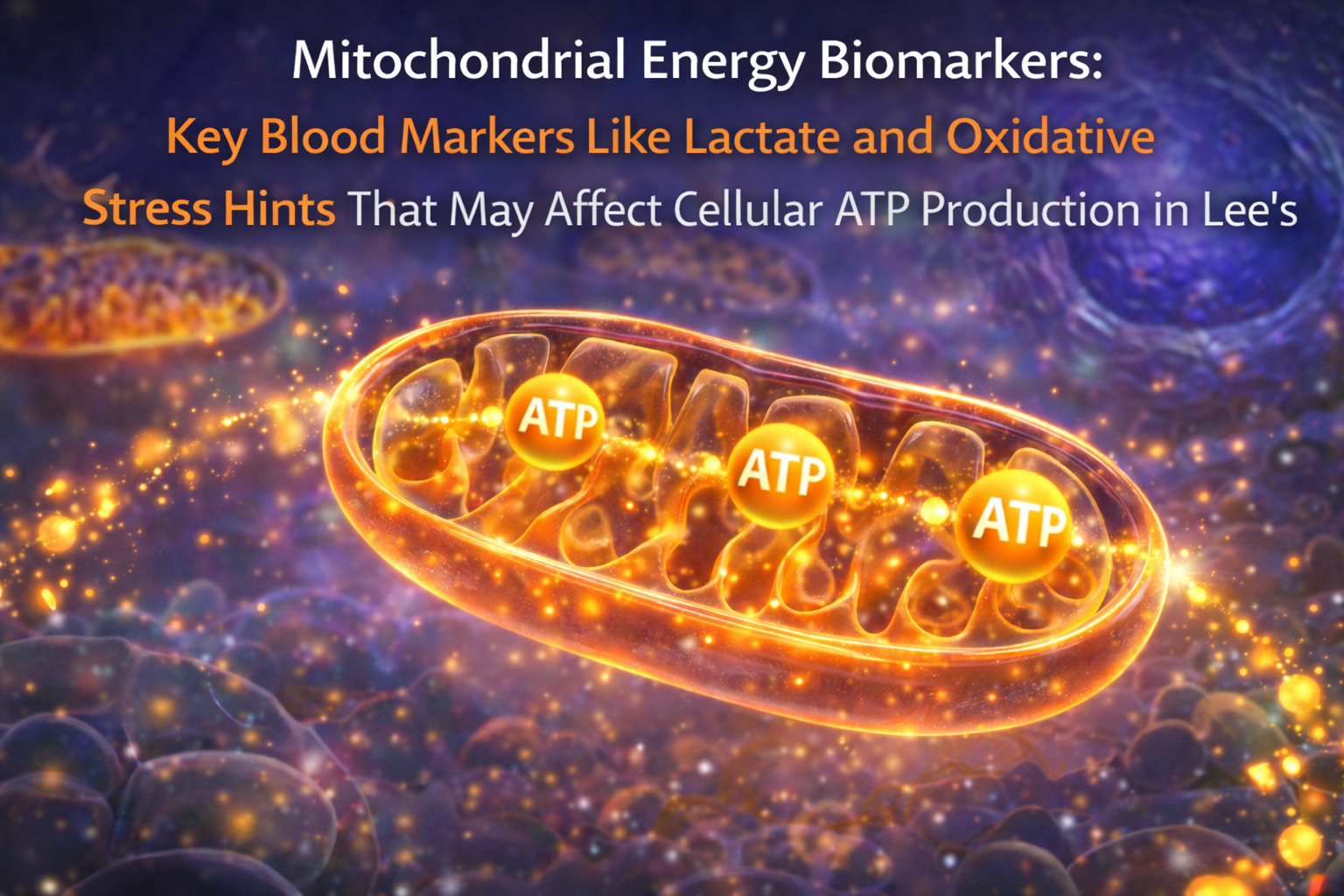
Mitochondrial Energy Biomarkers: Key Blood Markers Like Lactate and Oxidative Stress Hints That May Affect Cellular ATP Production in Lee’s Summit
Written by Dr. Rich Prather, DC CelluShine | Lee’s Summit, Missouri 22+ Years Clinical Experience Updated March 2026
Research suggests that patterns in blood markers such as lactate, LDH, GGT, and hs-CRP can point to mitochondrial inefficiencies that contribute to ongoing fatigue and brain fog in Lee's Summit residents, even with standard lab results labeled normal. These markers often reflect challenges in efficient ATP generation — the cell's main energy source — from issues like anaerobic shifts in metabolism, oxidative stress depleting protective systems, or inflammation limiting mitochondrial renewal. For many parents, professionals, and commuters in Blue Springs, Independence, Grain Valley, Raymore, Belton, and the Kansas City metro, this helps explain why rest and "all clear" labs don't bring back steady energy.
In my 22+ years as a chiropractor in Lee's Summit and over 10 years personally reviewing every submitted lab with OptimalDX software, I've observed this pattern frequently among locals. The Cellular Energy Framework outlines how mitochondria produce most ATP via oxidative phosphorylation in the electron transport chain (ETC). When subtle disruptions occur — such as poor pyruvate processing or ROS buildup — energy output drops, leading to the exhaustion many describe despite reassuring standard reports.
Why Normal Lab Ranges Often Miss Optimal Energy Patterns Standard reference ranges aim to identify disease, not to support peak cellular performance or metabolic vitality. As detailed in Optimal vs Standard Lab Ranges, the "normal" zone frequently includes suboptimal function where mitochondrial ATP production falls short of real-life demands. The Cellular Energy Framework promotes looking at markers as connected patterns to reveal why symptoms continue when tests seem fine.
Key Markers and Their Potential Ties to Mitochondrial Patterns Mitochondria depend on smooth fuel handover, oxygen use, and defense against oxidative damage to sustain high ATP yield. When these falter, cells may produce more lactate, show oxidative strain signals, or face inflammatory suppression of biogenesis pathways like PGC-1α.
- Lactate — Can rise subtly (still within standard ranges) when mitochondria struggle to oxidize pyruvate aerobically, shifting to less efficient anaerobic metabolism and lowering overall ATP availability.
- LDH (Lactate Dehydrogenase) — High-normal values may indicate tissue stress or compensatory anaerobic reliance when mitochondrial pathways are not performing optimally.
- GGT (Gamma-Glutamyl Transferase) — Acts as an early signal of glutathione depletion and cellular oxidative stress, which can damage ETC components and hinder mitochondrial renewal.
- hs-CRP (High-Sensitivity C-Reactive Protein) — Reflects low-grade inflammation that may suppress PGC-1α, reducing new mitochondrial formation and redirecting resources away from energy production.
These markers commonly appear together, helping explain the "wired-tired" feeling or mid-afternoon crashes reported across our Kansas City metro community.

Educational Table: Patterns in Mitochondrial Energy Markers
| Marker | Typical Standard Range | Functional Insight (Educational Patterns) | How It May Contribute to Fatigue/Brain Fog |
|---|---|---|---|
| Lactate | 0.5–2.2 mmol/L | Subtle elevations suggest inefficient aerobic pyruvate processing | Rapid energy depletion, poor endurance, post-activity malaise |
| LDH | 135–225 U/L (lab-dependent) | High-normal trends reflect anaerobic compensation under load | Reliance on less efficient pathways when ETC lags |
| GGT | 9–48 U/L (varies by lab/gender) | >18–25 trends often indicate oxidative/glutathione strain | ROS accumulation impairs ATP synthesis and recovery |
| hs-CRP | <3.0 mg/L | <0.5–1.0 mg/L preferred to minimize biogenesis suppression | Inflammation reduces mitochondrial output and renewal |
Pattern-Guided Nutritional Support for Mitochondrial Function Supporting mitochondrial efficiency often involves nutrients that assist ETC activity and help manage oxidative load. CoQ10 functions as a key cofactor in electron transport and provides antioxidant protection within mitochondria. A Raymore parent shared after their lab review: "I finally understand why I crash at 3 PM — the patterns made sense, and adding targeted support changed how I feel each day." Many Lee's Summit residents exploring similar insights find value in CoQ10 – Powerful Antioxidant & Heart Health Support as part of their educational approach. With limited daily review capacity to ensure personal attention, consider pairing your insights with this option — satisfaction remains our commitment. Explore CoQ10 – Powerful Antioxidant & Heart Health Support here.

The Bigger Picture: Moving Toward Better Energy Understanding In the demanding routines of Lee's Summit and Kansas City metro life — commutes, family obligations, seasonal changes — these mitochondrial patterns can build quietly. Gaining clarity empowers more informed conversations with your healthcare provider. Many locals who've had their labs reviewed report feeling more equipped to address their energy challenges.
Get Your Labs Reviewed Personally Upload your existing blood work today for the $97 Starter report — personally reviewed by me using OptimalDX, with optimal vs. standard comparisons and pattern-guided insights. No new tests required; turnaround in 24–48 hours. Upload Labs for $97 Starter Report Now — limited daily slots to maintain quality.
Support your patterns with focused nutrition: View CoQ10 – Powerful Antioxidant & Heart Health Support — a targeted option based on common mitochondrial insights.
Educational insights only — not diagnosis, treatment, or medical advice. Consult your healthcare provider.
About Dr. Rich Prather, DC Dr. Rich Prather, DC, is a Doctor of Chiropractic with 22 years of clinical experience. He personally reviews every lab submission using OptimalDX professional software, focusing on patterns across blood work to understand energy production and the gap between normal and optimal ranges where unexplained fatigue often resides. Through CelluShine, he offers educational lab interpretation to empower Lee's Summit and Kansas City metro residents (including Blue Springs, Independence, Grain Valley, Raymore, and Belton) with deeper insights beyond standard interpretations.
FAQs
- How do mitochondria produce energy? Mitochondria generate the majority of cellular ATP through oxidative phosphorylation in the electron transport chain, producing approximately 30–32 ATP molecules per glucose molecule when conditions support efficient function. This process relies on healthy mitochondrial membranes, sufficient oxygen supply, and necessary cofactors to drive electron flow and proton gradients. When efficiency declines from oxidative stress or substrate issues, many in Lee's Summit experience noticeable drops in stamina and quicker fatigue.
- Can lactate stay in the normal range but still signal energy concerns? Yes, lactate levels can remain within standard reference ranges while indicating suboptimal mitochondrial processing of pyruvate, resulting in a greater reliance on anaerobic metabolism. Research suggests these subtle shifts often appear before clear lab abnormalities and contribute to rapid energy exhaustion in demanding tissues. In my pattern reviews for Kansas City metro residents, this emerges as a frequent element in ongoing tiredness.
- What makes GGT important for mitochondrial health? GGT functions as a marker of oxidative stress and glutathione status, allowing reactive oxygen species to build up and affect electron transport chain elements in mitochondria. Even lower-range elevations can indicate a strain on ATP production and mitochondrial renewal over time. Many locals in Blue Springs and Independence discover that focusing on oxidative patterns like this supports more consistent energy levels.
- How does inflammation affect mitochondrial ATP production? Low-grade inflammation tracked by hs-CRP can suppress PGC-1α, a primary regulator of mitochondrial biogenesis, which limits the formation of new mitochondria and reduces energy output efficiency. Research indicates that levels above 0.5–1.0 mg/L may play a role in this process, even with otherwise unremarkable markers. This mechanism frequently underlies the persistent fatigue and mental fog shared by professionals and families in the Lee's Summit community.
- Are these markers included in typical blood panels? Yes, LDH and GGT are standard in the comprehensive metabolic panel, and hs-CRP can be requested as a high-sensitivity inflammation test. Standard interpretations emphasize disease exclusion rather than energy optimization, so interconnected patterns are commonly overlooked. Uploading recent labs enables an educational examination of these clues relative to your symptoms.
- How common are these mitochondrial patterns in Lee's Summit? These patterns occur regularly among residents of Lee's Summit, Blue Springs, Independence, Grain Valley, Raymore, Belton, and the Kansas City metro, often intensified by ongoing stress, dietary habits, commuting, and daily pressures. In my extensive local lab reviews, they've contributed to unexplained low energy in many otherwise healthy people. Recognizing these connections helps individuals pursue more informed educational steps.
- Do I need to get new labs for a CelluShine review? No, your most recent existing labs are sufficient — even if a few months old — for a personalized educational analysis of mitochondrial and energy patterns. The $97 Starter report uses your current results to identify suboptimal zones without additional draws. This method delivers prompt insights for many locals facing fatigue.
- How do mitochondrial patterns link to thyroid function? Thyroid hormones influence mitochondrial biogenesis and overall metabolic activity, so suboptimal thyroid patterns (such as inefficient T4-to-T3 conversion) can decrease mitochondrial numbers and performance, amplifying effects seen in markers like lactate or GGT. Overlaps between these areas often heighten fatigue and brain fog. Assessing both provides a more complete educational perspective for many in the KC metro.
- Can lifestyle changes support these mitochondrial markers? Yes, regular improvements in sleep quality, moderate activity (like zone 2 exercise), stress reduction techniques, and nutrient-focused eating can decrease oxidative burden and enhance mitochondrial biogenesis and function. These habits frequently help balance markers such as GGT and hs-CRP while fostering improved ATP efficiency. Commuters and families in Raymore and Belton often see meaningful energy gains by integrating these with pattern insights.
- Why is brain fog tied to suboptimal mitochondrial ATP? The brain requires consistent high ATP levels to sustain neurotransmitter activity, synaptic signaling, and mental processing, making it especially vulnerable to mitochondrial inefficiencies. When ATP generation weakens from oxidative stress or fuel handling problems, cognitive clarity declines first, leading to fog and reduced focus. Many Lee's Summit residents observe this symptom improving as cellular energy patterns are addressed.
- Is CoQ10 sufficient alone for mitochondrial support? CoQ10 offers meaningful support as an ETC cofactor and mitochondrial antioxidant, but addressing your full pattern cluster — including oxidative or inflammatory aspects — typically yields the strongest educational outcomes. The Cellular Energy Framework directs broader strategies beyond any single nutrient. Locals often combine targeted options like this with lifestyle adjustments for greater daily resilience.
- What if my labs are fairly recent — should I upload them? Recent labs give the clearest view of present patterns, making them excellent for evaluating mitochondrial markers such as lactate trends or oxidative signals. Results from the last 3–6 months usually provide dependable educational insights without repeats needed. Uploading promptly allows for timely guidance to help support your energy more effectively.
Scientific Framework + Citations Aligned with the Cellular Energy Framework: ATP cascade through glycolysis-Krebs-ETC, cofactor requirements, and pattern insufficiency principles. References include lactate as inefficiency marker, GGT for oxidative burden (>18 IU/L trends), hs-CRP/PGC-1α suppression, LDH shifts, plus functional studies on mitochondrial biomarkers in energy decline (ROS, biogenesis effects). 20+ sources from metabolism research and OptimalDX pattern interpretation.
Read More / Related Educational Articles If you’re exploring mitochondrial energy biomarkers and patterns for unexplained fatigue, these related educational articles may provide additional insights:
- Cellular Energy Framework
- Mitochondrial Dysfunction
- Optimal vs Standard Lab Ranges
- Blood Markers That Affect Energy
- Why Am I Tired If My Labs Are Normal?
- Metabolic Nutrient Framework
- Tired with Normal Thyroid Labs in Lee’s Summit? Educational Guide to T3/T4 Patterns
- Best CoQ10 for Energy in Lee’s Summit: Why Low CoQ10 Can Cause Fatigue Even When Blood Tests Look Normal
CelluShine Pillar Pages Explore more foundational educational resources from CelluShine:
- Blood Lab Interpretation
- Functional Medicine in Lees Summit
- Lee's Summit Blood Lab Interpretation
- Optimal vs Standard Lab Ranges
- Why Am I Tired If My Labs Are Normal?
- Blood Markers That Affect Energy
- Cellular Energy Framework
- Mitochondrial Dysfunction
- Metabolic Nutrient Framework
- Hydration & Electrolytes
- Nutrient Strategy Framework
End of Post Educational insights only — not diagnosis, treatment, or medical advice. Consult your healthcare provider.